What Is AI Crypto Price and How Does It Relate to AML Screening?
AI crypto price platforms aggregate real-time market data from multiple exchanges and use machine learning to predict trends, detect anomalies, and identify suspicious trading patterns. Separately, AML screening systems use AI to analyze blockchain transactions and wallet behavior. When combined, these tools create a comprehensive risk picture: a wallet holding coins at an unusually low price relative to market value may indicate stolen or mixed funds. Blockchain analytics engines ingest transaction graphs, IP logs, and exchange deposit histories to score wallet risk. The connection is practical—if you're receiving USDT TRC20 or Bitcoin, an AI-powered AML check will flag whether those coins have been through high-risk channels, regardless of their current market price. This integration helps compliance teams and traders avoid regulatory exposure.
How Does AML Crypto Screening Work with Machine Learning?
AML crypto check systems use supervised and unsupervised learning to classify transactions and wallets. The process works in stages: first, the system ingests blockchain data (addresses, transaction amounts, timestamps, and on-chain metadata). Second, it applies clustering algorithms to identify wallet clusters—groups of addresses likely controlled by the same entity. Third, it cross-references clusters against known risk sources: sanctioned entities (OFAC lists), darknet marketplace addresses, mixer services, gambling platforms, and stolen fund registries. Fourth, it assigns a risk score (typically 0–100 or low/medium/high) based on the strength of connections to these sources. Machine learning models continuously retrain on new data, improving detection of novel mixing patterns and scam wallets. When you perform an aml check crypto on a TRX address, the system returns this risk score plus a breakdown of flagged transaction paths. The speed and accuracy of AI means results arrive in seconds, not days.
What Risk Score Levels Mean and How to Interpret Them
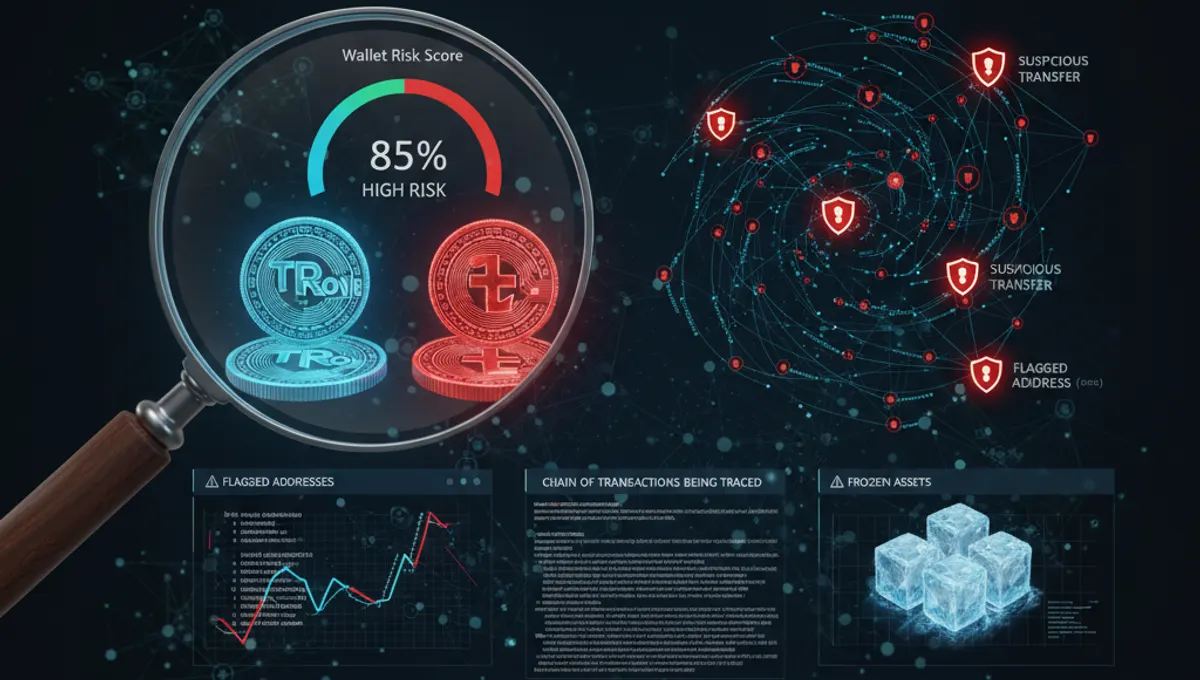
Risk scores typically range from 0 (clean) to 100 (high-risk). A score of 0–20 indicates the wallet has minimal connection to known risk sources—safe for most transactions. Scores of 21–50 suggest moderate risk: the wallet may have received coins from a mixer or gambling platform, but no direct link to theft or sanctions. Scores of 51–80 flag significant risk: strong evidence of mixing, darknet exposure, or stolen funds. Scores above 80 indicate critical risk—likely direct involvement with sanctions, active scams, or major theft. Most exchanges accept deposits from wallets scoring below 30; some enforce stricter thresholds at 20. When you check a wallet before sending USDT or TRX, aim for a score below 30 to minimize freeze risk. The breakdown matters too: a wallet flagged only for mixer exposure carries less regulatory weight than one linked to a sanctioned entity. Always review the detailed risk factors, not just the number.
Are Crypto Transactions Traceable and How Does This Enable AML Screening?
Yes, all blockchain transactions are traceable by design. Bitcoin, Ethereum, Tron, and USDT on TRC20 record every transfer in a permanent, public ledger. This transparency is what makes AML screening possible. When you send coins, the transaction includes the sender address, receiver address, amount, timestamp, and transaction ID—all visible on the blockchain forever. Blockchain analytics firms use this data to build transaction graphs, mapping how coins flow from exchange to wallet to mixer to darknet market. Even when coins pass through mixers (services designed to obscure transaction trails), AI can often re-identify them by analyzing timing, amounts, and cluster behavior. This traceability is why receiving tainted coins is risky: if law enforcement or an exchange traces coins back to a theft or sanctions violation, your wallet and any linked exchange account can be frozen. KYT (Know Your Transaction) screening leverages this traceability to flag risky inflows before they reach your wallet.
How to Check a Wallet Before Receiving USDT or TRX: Step-by-Step
Follow these steps to screen a wallet before accepting a transfer:
1. Obtain the sender's wallet address (TRX, USDT TRC20, or Bitcoin).
2. Visit a trusted AML screening service from the verified list on this site's AML Services page—these tools are designed specifically for wallet risk assessment.
3. Paste the address into the search field.
4. Review the risk score and detailed breakdown (mixer exposure, darknet links, stolen funds, sanctions).
5. Check the transaction history: look for patterns of rapid transfers, round-number amounts, or connections to known scam wallets.
6. If the score is below 30 and no major red flags appear, the wallet is likely safe.
7. If the score exceeds 50 or shows sanctions exposure, decline the transfer or escalate to compliance.
This process takes 30 seconds and can prevent your account from being frozen. Many traders perform this check automatically before accepting large deposits. Using verified AML services ensures your screening is accurate and defensible if regulators later inquire.
What Happens If You Receive Tainted Coins and How to Respond
If you receive coins flagged as tainted or stolen, several outcomes are possible. First, if you deposit them to an exchange, the exchange's transaction monitoring system will likely flag the deposit and freeze your account pending review. Second, if you hold them in a self-custody wallet, you retain the coins but face reputational and legal risk if they're later linked to a crime. Third, if you attempt to sell them, the receiving exchange may reject the transaction or lock your account. If your account is frozen, the exchange will typically request documentation proving you acquired the coins legitimately (e.g., a receipt from a trusted sender). If you cannot provide proof, the freeze may become permanent. To respond: contact the exchange's compliance team immediately, provide any evidence of legitimate receipt, and request a manual review. In future transactions, always perform an aml check crypto before accepting deposits. If you discover you've received stolen funds, reporting this to the exchange and law enforcement can mitigate liability.
Comparing AML Check Services and Choosing the Right Tool
Not all AML screening tools are equal. Some focus on speed and basic risk scoring; others provide deep transaction analysis and sanctions screening. When evaluating a service, consider: coverage (does it screen TRX, USDT TRC20, Bitcoin, and Ethereum?), accuracy (does it flag known scams and mixers?), speed (results in seconds or minutes?), transparency (does it explain why a wallet is flagged?), and cost (free tier or subscription?). Many services offer a free tier with limited checks per month, useful for occasional screening. For regular use, a paid subscription provides unlimited checks and detailed reports. The AML Services page on this site curates verified providers that meet compliance standards and deliver reliable results. Start there to find a tool that matches your needs—whether you're a trader screening inbound transfers, a compliance officer monitoring wallets, or a business accepting crypto payments. Using a trusted service ensures your screening is defensible and reduces the risk of regulatory surprises.
Frequently asked questions
What is KYT crypto and how does it differ from KYC?
KYT (Know Your Transaction) monitors individual transactions and wallet activity for risk, while KYC (Know Your Customer) verifies user identity upfront. KYT uses AI to screen incoming coins for theft, mixing, or sanctions exposure. Both are part of AML compliance, but KYT is real-time and transaction-focused, making it essential for detecting tainted coins before they enter your wallet.
Can I get a free AML check crypto on my wallet?
Yes. Many verified AML screening services offer free tier checks, typically 1–5 scans per month. These provide basic risk scoring and flag major red flags like sanctions or darknet exposure. For unlimited checks and detailed transaction analysis, paid subscriptions are available. Check the AML Services page on this site for trusted free and paid options.
How long does an AML crypto check take?
Most AI-powered AML checks complete in 5–30 seconds. The system queries blockchain data, cross-references risk databases, and calculates a score in real-time. Some services offer instant results for common addresses; complex wallets with deep transaction histories may take up to a minute. Speed depends on the service and current network load.
What does a high AML risk score mean for my USDT or TRX wallet?
A high risk score (above 50) indicates the wallet has connections to mixers, darknet markets, stolen funds, or sanctions. If you deposit high-risk coins to an exchange, your account may be frozen pending compliance review. You may lose access to your funds for weeks or permanently. Always screen wallets before accepting transfers to avoid this outcome.
Are crypto transactions traceable even if coins go through a mixer?
Yes, blockchain transactions are permanently traceable. Mixers obscure the direct link between sender and receiver, but advanced blockchain analytics can often re-identify coins by analyzing timing, amounts, and cluster patterns. Law enforcement and exchanges use these techniques to track stolen funds and sanctions violations, which is why mixer exposure raises AML risk scores.