What Is an AML Crypto Check and Why It Matters
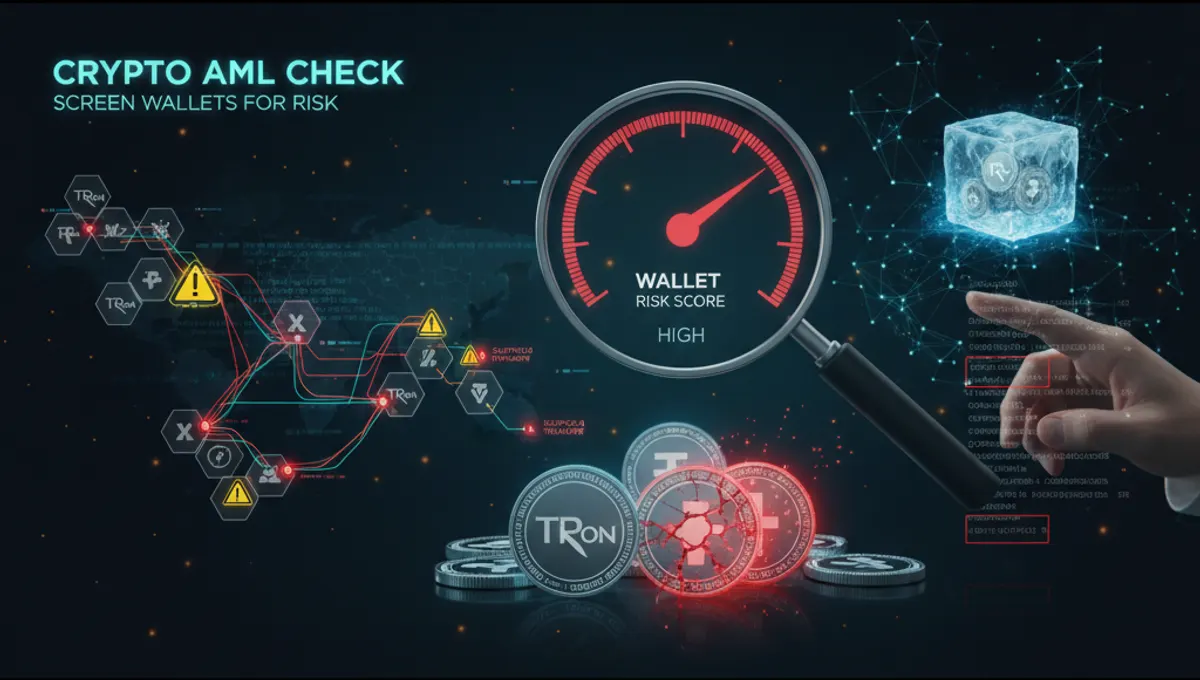
An AML crypto check analyzes a wallet address against multiple risk indicators: transaction history with known darknet markets, stolen fund databases, sanctions lists, and mixer usage. The check produces a risk score—typically ranging from low to critical—that reflects the likelihood of compliance problems. Exchanges use these scores to decide whether to accept deposits or freeze accounts. If you receive USDT or TRX from a flagged address, your own wallet may inherit that risk, leading to deposit rejections or account locks. A free AML crypto check or paid screening service runs these checks in seconds, giving you visibility before accepting funds. This is especially important for businesses, traders, and anyone handling high-value transactions.
How AML Risk Scoring Works for Crypto Wallets
AML risk scoring combines on-chain data with external intelligence. Blockchain analytics platforms track wallet behavior: transaction volume, frequency, mixing patterns, and connections to known bad actors. A wallet that receives funds directly from a sanctioned entity or darknet marketplace gets flagged. Risk scores are usually tiered: green (low risk, safe to transact), yellow (medium risk, review before accepting), orange (high risk, likely to be rejected by exchanges), and red (critical risk, frozen or blacklisted). The score reflects cumulative exposure—one transaction with a mixer doesn't automatically make a wallet high-risk, but repeated mixing or darknet connections do. Different AML services may weight factors differently, so a wallet might show slightly different scores across platforms. Understanding these thresholds helps you decide whether to accept incoming funds or investigate further.
How to Check a Crypto Wallet Before Receiving USDT or TRX
Follow these steps to perform an AML crypto check on a wallet address:
1. Copy the wallet address (Bitcoin, Ethereum, Tron, or other blockchain).
2. Visit a trusted AML screening service—check our curated list of verified AML services on this site for reliable options.
3. Paste the address into the search field.
4. Review the risk score and any flagged indicators (darknet exposure, stolen funds, sanctions, mixer usage).
5. If the score is green or low-yellow, the wallet is generally safe.
6. If the score is orange or red, investigate further or decline the transaction.
7. Document the check result for your compliance records.
Free AML crypto checks are available through several services, though they may show limited detail. Paid checks provide deeper transaction history, entity identification, and detailed risk breakdowns. For high-value transactions or business use, a paid check is worth the cost. Always verify the address spelling before checking—a typo could lead you to screen the wrong wallet.
Understanding Risk Categories: Darknet, Theft, Sanctions, and Gambling
AML checks flag wallets across several risk categories:
**Darknet exposure**: Funds linked to marketplace transactions or known darknet service addresses. These wallets carry high compliance risk.
**Stolen funds**: Addresses flagged in theft reports or linked to hacking incidents. Receiving stolen crypto can result in account freezes or legal complications.
**Sanctions**: Wallets connected to sanctioned countries, entities, or individuals under government restrictions. Transacting with sanctioned addresses violates law in most jurisdictions.
**Mixer usage**: Wallets that send funds through tumblers or mixing services to obscure transaction trails. Exchanges view this as suspicious activity.
**Gambling and scams**: Addresses tied to Ponzi schemes, rug pulls, or unregulated gambling platforms. These carry reputational and legal risk.
A single flag doesn't always mean the wallet is unusable—context matters. A wallet that received stolen funds once but has been dormant for years poses less risk than one actively mixing funds. Review the full transaction history before deciding.
What Happens If Your Coins Are Flagged as Tainted or Dirty
If you receive or hold cryptocurrency flagged as tainted or dirty, several outcomes are possible:
**Exchange deposit rejection**: Most major exchanges run AML checks on incoming deposits. If your coins score high-risk, the exchange will refuse the deposit and may freeze your account pending review.
**Account suspension**: If you deposit flagged coins without disclosure, the exchange may lock your account and request documentation of the funds' origin.
**Forced liquidation**: Some platforms may liquidate flagged holdings at unfavorable rates or hold them indefinitely.
**Regulatory inquiry**: In jurisdictions with strict AML enforcement, receiving sanctioned or stolen funds can trigger government inquiries.
If your wallet is flagged, you have limited options: provide documentation proving legitimate ownership, wait for the flag to age out (some services update risk scores over time), or move funds to a new wallet (though the taint may follow). Prevention is far easier—always check a wallet's AML status before accepting large transfers. Use the free AML crypto check tools available through verified services on this site to screen incoming addresses.
Free vs. Paid AML Crypto Wallet Checks
Free AML crypto checks offer basic screening: a risk score and top-level flags for darknet, theft, or sanctions exposure. They're useful for quick due diligence on small transactions or personal use. Limitations include limited transaction history depth, delayed updates, and no detailed entity identification.
Paid AML checks provide comprehensive reports: full transaction lineage, entity names and risk profiles, detailed mixing analysis, and real-time updates. They're essential for businesses, exchanges, and high-value transactions. Cost varies by service and report depth, typically ranging from a few dollars per check to subscription models for high-volume screening.
For most users, a free check is sufficient to catch obvious red flags. For compliance-critical work, a paid service through a verified provider ensures thorough due diligence. Our curated list of AML services on this site includes both free and paid options—review them to find the right balance of cost and detail for your needs.
Best Practices to Avoid Receiving Tainted Crypto
Prevent compliance headaches by screening wallets proactively:
1. **Always check before accepting large transfers**: Run an AML crypto check on any address sending you significant amounts, even if you trust the sender. Their wallet may have been compromised.
2. **Request sender documentation**: Ask counterparties to provide proof of funds origin, especially in business transactions.
3. **Use verified exchanges for deposits**: Reputable exchanges run their own AML checks, adding a layer of protection.
4. **Avoid mixing services**: Never intentionally route funds through tumblers or mixers—this flags your wallet as high-risk.
5. **Monitor your wallet regularly**: Periodically check your own address for new risk flags or unexpected transactions.
6. **Document all checks**: Keep records of AML checks performed, especially for business or tax purposes.
7. **Use trusted screening services**: Rely on verified AML providers listed on this site rather than unknown or unvetted tools.
These practices significantly reduce the chance of receiving dirty crypto or facing exchange account restrictions.
Frequently asked questions
Is there a free AML crypto check tool I can use right now?
Yes, several services offer free AML crypto checks with basic risk scoring. Visit the verified AML services list on this site to find free options. Free checks show risk level and major flags but may lack detailed transaction history. For comprehensive screening, paid checks provide deeper analysis.
Can I check a Tron USDT TRC20 address for AML risk?
Yes, most AML screening services support Tron addresses and USDT TRC20 tokens. Enter the wallet address into any major blockchain analytics platform to get a risk score. Tron transactions are publicly visible on the blockchain, making them fully auditable for AML compliance.
What AML risk score is acceptable before receiving crypto?
Green (low risk) and light yellow (low-medium risk) scores are generally safe. Orange and red scores indicate high compliance risk and should be declined unless you have strong documentation of fund origin. Exchange policies vary—some accept yellow scores, others reject anything above green.
Will checking an AML crypto wallet alert the owner?
No, running an AML check on a public blockchain address is passive and invisible to the wallet owner. You're only querying public ledger data through a third-party service. The check leaves no trace on the blockchain.
What should I do if I already received tainted crypto?
Document the transaction and its source. Contact the exchange where you plan to deposit it and provide proof of legitimate receipt. Some exchanges may accept the funds with documentation. Avoid mixing or moving the funds, as this increases compliance risk. Consider consulting a compliance professional for high-value cases.