What Is an AML Check Fee and Why Does It Exist?
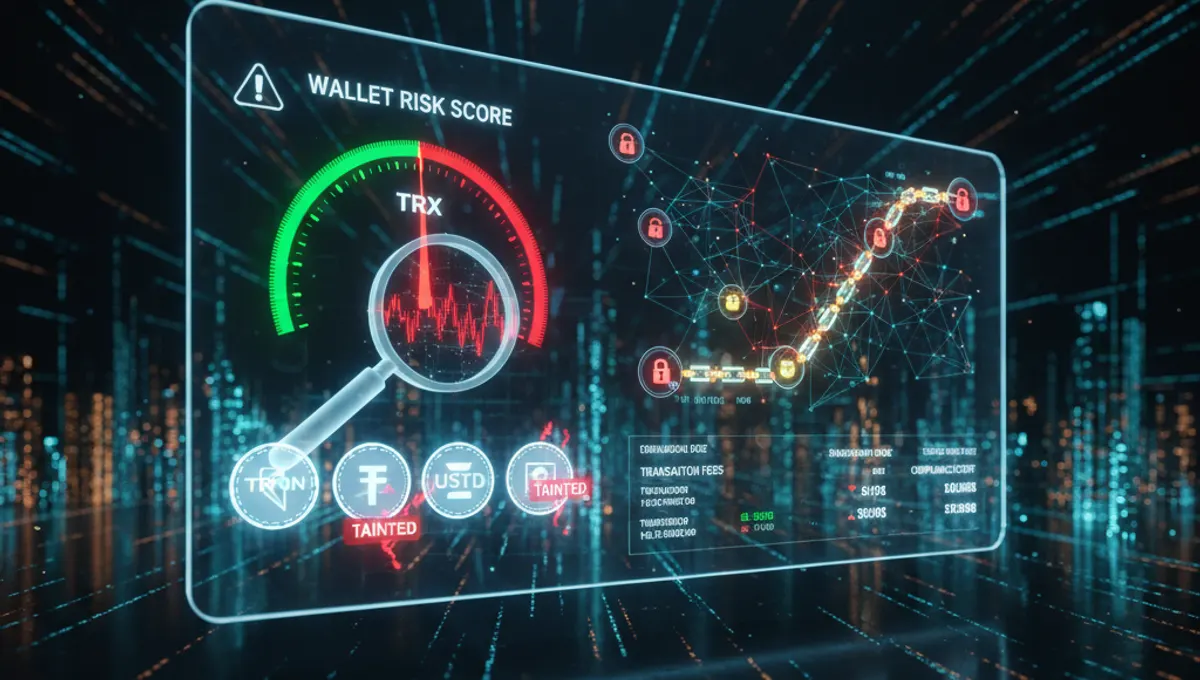
An AML check fee is the cost charged by a compliance service to screen a crypto wallet for risk. These fees cover the operational expenses of maintaining blockchain databases, updating sanctions lists, and running risk algorithms. When you request an AML check on a Tron address, Bitcoin wallet, or USDT TRC20 account, the service must query multiple data sources—darknet market lists, stolen fund registries, and regulatory sanctions databases—to generate your risk score. Free basic checks typically cover simple wallet balance lookups, while paid tiers unlock deeper analysis: transaction history review, entity identification, and detailed risk categorization. The fee structure reflects the complexity of blockchain analytics and the compliance infrastructure required to detect tainted coins and sanctioned entities.
How Do AML Check Pricing Models Work?
Most AML check services use one of three pricing models:
1. **Per-scan pricing**: You pay a fixed fee for each wallet check. This suits occasional users who screen a few addresses monthly.
2. **Subscription tiers**: Monthly or annual plans unlock unlimited checks within a tier. Higher tiers include API access, batch screening, and priority support.
3. **Freemium model**: Basic AML check crypto screening is free; advanced features (transaction history, detailed risk reports, API integration) require payment.
Some services charge differently based on blockchain type—checking a Tron address might cost less than screening Bitcoin due to transaction volume differences. Enterprise clients often negotiate custom pricing for high-volume transaction monitoring and KYT (Know Your Transaction) workflows. When evaluating an AML check process cost, compare what's included: does the fee cover sanctions screening, darknet exposure detection, and stolen fund flagging, or are these add-ons?
What Are Typical AML Check Fee Ranges?
Free AML checks usually provide basic wallet risk scoring and balance verification but lack detailed transaction analysis. These are useful for quick due diligence before receiving USDT or Tron transfers.
Pay-per-scan services typically charge between a few dollars and tens of dollars per check, depending on report depth. A simple risk score might cost $5–$15, while a comprehensive report with transaction history and entity mapping costs $25–$50.
Monthly subscriptions range from $20–$100 for small businesses and freelancers, to $500–$5,000+ for enterprises requiring unlimited API calls and batch screening. Annual plans often offer 20–30% discounts.
The AML check requirements you face determine which tier makes sense. If you're a crypto exchange or payment processor, you need transaction monitoring and sanctions screening—premium pricing is justified. If you're a freelancer checking one client wallet monthly, a free or low-cost per-scan option suffices. Visit our curated AML Services page to compare verified providers and their fee structures side-by-side.
What Factors Influence AML Check Crypto Costs?
Several variables affect pricing:
**Blockchain complexity**: Checking a Tron address may cost less than Bitcoin screening because TRC20 tokens have simpler transaction patterns. Ethereum and multi-chain wallets cost more due to cross-chain analysis.
**Report depth**: A basic risk score is cheaper than a full forensic report with transaction clustering, entity identification, and historical analysis.
**Data freshness**: Real-time screening costs more than batch processing. If you need instant sanctions list updates, expect premium pricing.
**Volume discounts**: Bulk screening (100+ wallets) typically qualifies for reduced per-check rates.
**Regulatory jurisdiction**: Services complying with stricter regulations (EU, US) may charge more due to higher compliance overhead.
**Feature set**: Platforms offering darknet detection, stolen fund flagging, and frozen USDT warnings charge more than basic risk scorers. The AML check requirements in your industry dictate which features justify the cost.
How to Choose an AML Check Service by Fee and Value
Start by defining your AML check requirements: frequency (one-time vs. ongoing), wallet types (Tron, Bitcoin, USDT), and report detail (risk score only vs. full forensics).
**For occasional users**: Free or pay-per-scan services ($5–$20 per check) are sufficient. You get a risk score and basic sanctions screening without subscription commitment.
**For regular compliance work**: A monthly subscription ($50–$200) usually offers better value than per-scan pricing if you screen 10+ wallets monthly.
**For enterprises**: Custom API pricing and unlimited transaction monitoring justify premium costs. Negotiate volume discounts and SLA guarantees.
Compare what's included in each fee tier—some services bundle sanctions screening, darknet detection, and stolen fund alerts; others charge separately. Our AML Services directory lists verified providers with transparent pricing and feature breakdowns. Review their fee structures, trial periods, and customer support quality before committing. Many offer free trial checks so you can evaluate accuracy and usability at no cost.
Can You Get a Free AML Check, and What Are the Limits?
Yes, many platforms offer free AML check crypto screening with limitations. Free tiers typically include:
- Basic wallet risk scoring (low, medium, high)
- Balance and transaction count
- Simple sanctions list matching
- Limited historical data (last 30–90 days)
Free checks usually don't include:
- Detailed transaction analysis
- Darknet market exposure detection
- Stolen fund flagging
- Entity identification and clustering
- API access or batch screening
- Priority support
Free AML checks are useful for quick due diligence—screening a Tron address before accepting a payment, or verifying a Bitcoin wallet isn't flagged. However, if you need comprehensive risk assessment for compliance reporting, frozen USDT prevention, or regulatory audit trails, paid tiers are necessary. The AML check process for free services is usually instant but less thorough. For serious compliance work, budget for a paid service or subscription to access the full feature set.
What Should You Do If Your Wallet Is Flagged After an AML Check?
If an AML check flags your wallet as high-risk or tainted, take these steps:
1. **Review the risk report**: Understand why your wallet was flagged—sanctions exposure, darknet transaction history, stolen funds, or mixer use.
2. **Verify the source**: Cross-check the finding with another AML service. False positives occur; a second opinion confirms accuracy.
3. **Document your transaction history**: If you received funds unknowingly from a compromised source, gather evidence of your due diligence.
4. **Contact exchanges**: If your USDT or Tron wallet is frozen, reach out to the exchange with your AML check results and transaction documentation. Provide proof that you didn't knowingly handle tainted coins.
5. **Consult compliance counsel**: For serious flags (sanctions exposure, large stolen fund amounts), seek legal advice before moving funds.
6. **Use verified AML services**: When disputing a flag, reference reports from trusted providers listed on our AML Services page. Exchanges trust established platforms, so credible screening results strengthen your case.
Frequently asked questions
How much does an AML check cost?
Free basic checks are available; pay-per-scan services cost $5–$50 per wallet depending on report depth. Monthly subscriptions range from $20–$200 for small users, and $500–$5,000+ for enterprises. Costs vary by blockchain type, data freshness, and feature set. Compare verified providers on our AML Services page for transparent pricing.
Is there a free AML check for crypto wallets?
Yes, many platforms offer free AML checks with basic risk scoring, balance lookup, and simple sanctions screening. Free tiers lack detailed transaction analysis, darknet detection, and API access. Free checks are useful for quick due diligence but insufficient for compliance reporting. Paid tiers unlock comprehensive risk assessment.
Why do AML checks charge different fees for different blockchains?
Fees vary by blockchain complexity and data availability. Tron and USDT TRC20 screening may cost less than Bitcoin due to simpler transaction patterns. Ethereum and multi-chain analysis cost more. Real-time screening is pricier than batch processing. Your AML check requirements determine which blockchain analysis justifies the cost.
What's included in a paid AML check fee?
Paid tiers typically include risk scoring, sanctions list matching, transaction history, entity identification, darknet exposure detection, and stolen fund flagging. Premium plans add API access, batch screening, priority support, and real-time monitoring. Compare feature sets across services to ensure you're paying for what you need.
Can I dispute an AML check result if my wallet is flagged?
Yes. Request a detailed report explaining the flag, verify with a second AML service, document your transaction history, and contact your exchange with credible screening results. For serious flags, consult compliance counsel. Trusted AML services on our directory strengthen your dispute case with exchanges.