What Is a Crypto AML Check and Why It Matters
An AML check in crypto is a compliance screening that examines a wallet's transaction history and associated entities against risk databases. AML stands for Anti-Money Laundering, and in the crypto context, it identifies whether funds have been linked to illegal activity, sanctions lists, or compromised sources.
When you receive cryptocurrency, especially USDT or TRX on Tron, the coins may carry historical baggage. If those coins were previously stolen, used in darknet markets, or sent from a sanctioned entity, exchanges can freeze your account or reject deposits. A crypto AML check online reveals this risk before the transaction settles, letting you decide whether to proceed.
Key reasons to run an AML check:
- Avoid receiving stolen or blacklisted coins
- Prevent exchange account freezes and fund locks
- Comply with KYC/KYT requirements
- Identify sanctions exposure on counterparties
- Reduce regulatory and reputational risk
How AML Risk Scoring Works for Crypto Wallets
An AML crypto check assigns a risk score to an address based on its transaction patterns and associations. Risk scores typically range from 0 (clean) to 100 (high risk), though some services use percentile or categorical ratings.
Factors that influence a wallet's AML risk score include:
1. **Mixer and Tumbler Use**: Coins routed through privacy mixers are flagged as higher risk because they obscure the transaction trail.
2. **Darknet Market Links**: Addresses that receive funds from known darknet marketplaces carry elevated risk.
3. **Stolen Funds**: Coins traced back to exchange hacks, wallet compromises, or theft incidents are marked as tainted.
4. **Sanctions Exposure**: Wallets connected to sanctioned entities, countries, or individuals trigger compliance alerts.
5. **Scam and Fraud History**: Addresses associated with Ponzi schemes, rug pulls, or phishing attacks are labeled as risky.
6. **Gambling and High-Risk Services**: Some jurisdictions flag gambling platform addresses as higher risk.
7. **Age and Transaction Volume**: Newly created wallets or those with unusual activity patterns may score higher.
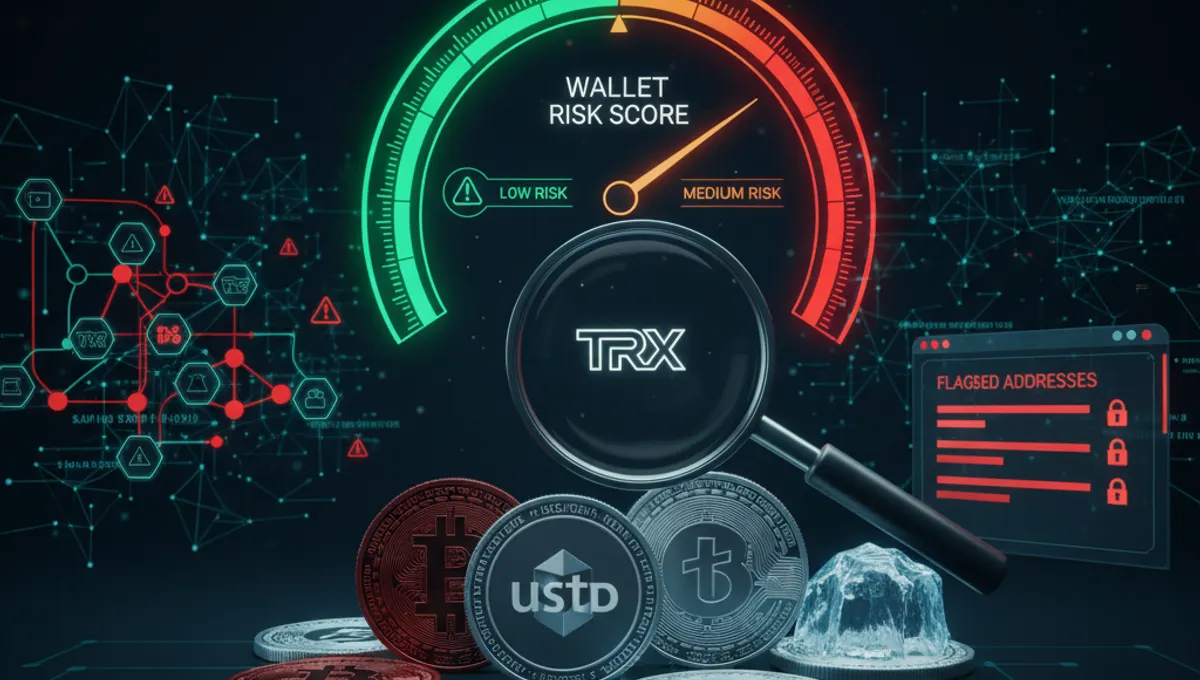
Most services classify scores into bands: 0–20 (low risk), 21–50 (medium risk), 51–80 (high risk), 81–100 (critical risk). Acceptable thresholds depend on your jurisdiction and counterparty requirements.
How to Check a Crypto Wallet for AML Risk Online
Running an AML check on a Bitcoin, Tron, or USDT address is straightforward. Here's a step-by-step process:
1. **Obtain the Wallet Address**: Copy the full address you want to screen. For Tron (TRX/USDT TRC20), it begins with 'T'. For Bitcoin, it starts with '1', '3', or 'bc1'.
2. **Choose an AML Check Service**: Visit a trusted AML screening provider. Our site maintains a curated list of verified AML services that offer wallet screening—start there to ensure you're using a reputable tool.
3. **Paste the Address**: Enter the address into the screening tool's search field.
4. **Review the Risk Report**: The service returns a risk score, flagged categories, and transaction history. Read the detailed findings to understand why the address was scored as it was.
5. **Assess the Result**: Compare the score against your risk tolerance and compliance requirements. A score below 20 is generally safe; 21–50 warrants caution; above 50 suggests avoiding the transaction.
6. **Document the Check**: Save or export the report for compliance records, especially if you proceed with a higher-risk address.
Many services offer a free AML crypto check with basic results, though detailed reports may require a paid subscription.
Understanding Risk Score Levels and What They Mean
Risk scores translate complex blockchain data into actionable guidance. Here's what each band typically indicates:
**Low Risk (0–20)**
The address shows no significant red flags. Funds appear clean, with no mixer use, sanctions exposure, or theft history. Safe for most transactions and exchange deposits.
**Medium Risk (21–50)**
The address has some concerning patterns—perhaps minor mixer exposure, connections to high-risk services, or limited transaction history. Acceptable for many use cases, but verify the specific flags before proceeding. Some exchanges may require additional documentation.
**High Risk (51–80)**
Multiple risk factors are present: mixer use, darknet connections, or sanctions proximity. Exchanges often freeze deposits from high-risk addresses. Proceed only if you have strong justification and compliance approval.
**Critical Risk (81–100)**
The address is directly linked to theft, sanctions lists, or active darknet markets. Most exchanges will reject deposits. Do not accept funds from critical-risk addresses unless you have explicit legal guidance.
Your acceptable threshold depends on your role. Retail users typically avoid anything above 30; institutional buyers may tolerate 50 with documentation. Always check your exchange's policy before receiving funds.
What to Do If Your Coins Are Flagged as Tainted or Dirty
Receiving flagged coins doesn't mean you've broken the law, but it does require action. Here's how to respond:
**Immediate Steps**
1. Do not deposit the coins to an exchange immediately. Frozen USDT and account bans are common consequences.
2. Run an AML check on the sending address to understand the risk category (mixer, darknet, theft, etc.).
3. Contact the sender and ask about the coin's origin. If they cannot explain it, reconsider the transaction.
**If You've Already Received Flagged Coins**
- Document the transaction and the AML report for your records.
- Contact your exchange's compliance team before attempting a deposit. Explain the source and provide the AML report.
- Some exchanges will accept flagged coins if you can demonstrate legitimate receipt (e.g., payment for services, inheritance).
- In jurisdictions with strict AML rules, holding flagged coins may require reporting to financial authorities.
**Long-Term Options**
- Coins flagged for mixer use may eventually age out of risk databases if they are not moved for an extended period.
- Coins linked to theft or sanctions are unlikely to ever be acceptable; do not hold them.
- If you believe the flag is an error, contact the AML service provider to request a review.
The safest approach is to avoid receiving flagged coins in the first place by running an AML check before accepting the transaction.
How Exchanges Freeze Funds and Why AML Checks Prevent It
Exchanges use blockchain analytics and AML screening to monitor incoming deposits. When a wallet sends coins to an exchange, the exchange's system checks the sending address against risk databases. If the address is flagged, the exchange may:
1. **Hold the Deposit**: Funds arrive but are locked pending manual review. This can take days or weeks.
2. **Freeze the Account**: The entire account is restricted, preventing withdrawals or further trading.
3. **Reject the Deposit**: The transaction is reversed, and coins return to the sending address.
4. **Close the Account**: For high-risk addresses, the exchange may permanently close your account and return all funds.
Frozen USDT and frozen accounts are particularly common because USDT is widely used and heavily monitored. A single deposit from a tainted address can trigger a freeze that affects all your holdings on that exchange.
**How AML Checks Prevent This**
By running an AML check before sending coins to an exchange, you identify risk before it becomes a problem. If the address is flagged, you can:
- Request a different address from the sender
- Ask the sender to explain the risk factors
- Decline the transaction entirely
- Use a different exchange with different risk thresholds
Proactive screening saves time, prevents account locks, and protects your funds from being stuck in limbo.
Comparing Free vs. Paid AML Check Services
AML check services range from free basic screening to comprehensive paid platforms. Here's what to expect:
**Free AML Crypto Check**
Free services typically provide a risk score and basic category flags (e.g., "mixer detected"). They are useful for quick screening before receiving small amounts. Limitations include:
- Limited transaction history detail
- No ongoing monitoring
- Fewer risk categories covered
- Slower updates to threat databases
**Paid AML Check Services**
Paid tiers offer detailed reports, including:
- Full transaction chain analysis
- Specific entity names and sanctions list matches
- Ongoing wallet monitoring
- API access for automated screening
- Priority support and custom risk thresholds
- Compliance-grade documentation
For retail users, a free AML crypto check is often sufficient. For businesses, exchanges, and compliance teams, paid services are essential for regulatory defensibility.
Our site curates a list of verified AML services that offer both free and paid options. Start there to compare features, pricing, and user reviews. Using a trusted service ensures your screening is based on current, accurate data rather than outdated or unreliable sources.
Frequently asked questions
Is it illegal to receive tainted crypto?
Receiving tainted crypto is not inherently illegal if you did not knowingly participate in the original crime. However, holding or depositing flagged coins can trigger exchange freezes and regulatory scrutiny. The legality depends on your jurisdiction and whether you can prove innocent receipt. Always screen addresses before accepting large transfers.
Can I use a free AML check for business compliance?
Free AML checks provide basic risk scores but lack the detailed documentation and audit trails required for regulatory compliance. Businesses should use paid services that generate compliance-grade reports. Free tools are suitable for personal screening; paid services are necessary for institutional use and legal defensibility.
How long does it take to run an AML check on a wallet?
Most AML checks complete within seconds to a few minutes. Free services may be slower due to server load. Paid services typically return results instantly. The speed depends on the service provider and whether the address is already in their database or requires new analysis.
What does a risk score of 50 mean for a crypto wallet?
A score of 50 falls in the medium-to-high risk range, indicating multiple concerning factors such as mixer use, high-risk service connections, or limited transaction history. Many exchanges will flag or hold deposits from such addresses. Review the specific risk categories before deciding to accept funds.
Can I dispute a high AML risk score on my wallet?
Yes, you can contact the AML service provider to request a review if you believe the score is incorrect. Provide evidence of legitimate transactions and explain any flagged activity. Reviews can take days or weeks, and not all disputes are overturned. Maintaining clean transaction history is the best prevention.