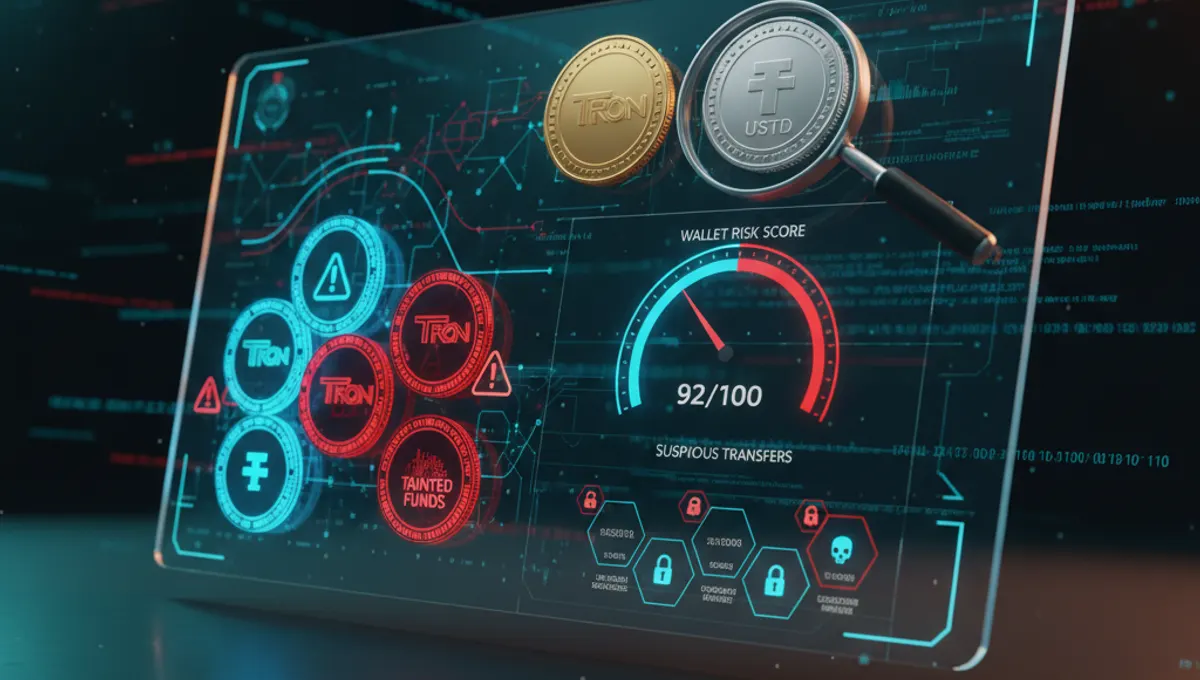
What Is a Free AML Crypto Check and Why It Matters
A free AML crypto check scans a blockchain address to identify whether funds are linked to illicit activity, sanctions, or high-risk behavior. These checks analyze transaction patterns, wallet age, mixing service usage, and darknet marketplace connections. When you receive USDT on Tron, Bitcoin, or Ethereum, exchanges and custodians may freeze your account if the coins are flagged as tainted or linked to sanctions lists. A free AML crypto check before accepting payment helps you avoid receiving dirty crypto that could lock your funds or trigger compliance holds. Most free tools offer basic screening for Bitcoin and Tron addresses, though depth and update frequency vary.
How AML Risk Scoring Works for Crypto Wallets
AML risk scores rank wallet addresses on a scale, typically 0–100 or low/medium/high, based on transaction behavior and historical exposure. Factors include: address age (newer wallets carry higher risk), transaction frequency, mixing service interactions, darknet marketplace connections, and presence on sanctions lists. A wallet that received funds from a known mixer or gambling platform may score higher than one with clean, direct transactions. Exchanges typically accept addresses with low risk scores, flag medium-risk addresses for review, and reject high-risk addresses outright. Free AML crypto check tools provide a snapshot of risk, but institutional-grade screening uses real-time blockchain monitoring and updated sanctions databases for more accuracy.
How to Perform a Free AML Crypto Check on a Tron or Bitcoin Address
Step-by-step process for a basic free AML crypto check:
1. Identify the address: Copy the full wallet address (starting with 0x for Ethereum, T for Tron, or 1/3 for Bitcoin).
2. Visit a free AML screening tool: Use services listed on verified AML provider directories to ensure data accuracy.
3. Paste the address into the search field.
4. Review the risk score and flags: Look for warnings about mixer usage, darknet exposure, or sanctions matches.
5. Check transaction history: Examine recent inflows and outflows to understand the address's activity pattern.
6. Decide whether to accept: Low-risk addresses are safe; medium-risk may require additional due diligence; high-risk should be rejected.
Free tools typically return results within seconds. For USDT TRC20 or Bitcoin transfers, run the check before confirming the payment to avoid receiving flagged coins.
Understanding AML Risk Score Levels and What They Mean
Risk score interpretation varies by service, but general thresholds are:
Low risk (0–25): Clean transaction history, no mixer or darknet exposure, not on sanctions lists. Safe to accept.
Medium risk (26–75): Some exposure to mixing services, gambling platforms, or older transactions with unclear origin. Requires review; acceptable for most use cases if you trust the sender.
High risk (76–100): Direct mixer connections, darknet marketplace activity, sanctions list matches, or stolen fund indicators. Reject these addresses to avoid frozen USDT and exchange account bans.
Acceptable thresholds depend on your compliance posture. Retail users may accept medium-risk addresses; regulated exchanges typically reject anything above low risk. Free AML crypto check tools provide a baseline; institutional users should cross-reference against official sanctions lists (OFAC, UN, EU) for regulatory certainty.
Common Red Flags: Dirty Crypto and Tainted Coins
Red flags that indicate tainted or dirty crypto include:
Mixer exposure: Funds routed through CoinJoin, Tornado Cash, or similar privacy mixers suggest an attempt to obscure origin.
Darknet marketplace connections: Addresses receiving funds from known dark web markets (Silk Road successor sites, ransomware payment addresses) are high-risk.
Stolen funds: Coins traced to exchange hacks, wallet thefts, or ransomware payments carry legal and compliance risk.
Sanctions matches: Addresses linked to sanctioned entities, countries, or terrorist financing lists trigger regulatory blocks.
Gambling platform activity: Repeated transfers to gambling sites may indicate money laundering.
A free AML crypto check flags these patterns automatically. If your address shows any of these red flags, do not accept the transfer; contact the sender to clarify the source or request funds from a clean address.
Free vs. Paid AML Crypto Check Services: What You Get
Free AML crypto check tools offer basic risk scoring and transaction history for individual address lookups. Limitations include: single-address queries only, delayed data updates (24–48 hours behind blockchain), limited sanctions database coverage, and no ongoing monitoring.
Paid services provide real-time screening, bulk address uploads, continuous wallet monitoring, integration with exchange APIs, and access to comprehensive sanctions lists. For one-time checks before receiving a payment, free tools suffice. For businesses, custodians, or frequent traders, paid services offer compliance certainty and audit trails.
When choosing a free AML crypto check, verify the service through trusted AML provider directories on this site to ensure data accuracy and avoid outdated or unreliable tools. Many reputable services offer free tiers with limited queries; check their terms to understand update frequency and coverage.
What to Do If Your Wallet Is Flagged as High-Risk
If a free AML crypto check flags your address as high-risk, take these steps:
1. Investigate the source: Review your transaction history to identify which inbound transfer triggered the flag.
2. Contact the sender: Ask them to clarify the origin of the funds. If they cannot explain, reject the transfer.
3. Request a clean transfer: Ask the sender to resend funds from a different address with a lower risk score.
4. Report false positives: If you believe the flag is incorrect (e.g., you used a privacy mixer for legitimate reasons), contact the AML service to request a review.
5. Avoid exchanges: Do not deposit flagged USDT or Bitcoin into regulated exchanges; they will freeze your account pending investigation.
6. Consult compliance: If you operate a business, consult a compliance officer or legal advisor before accepting flagged funds.
Frozen USDT on exchange accounts can take weeks to unfreeze, even after investigation clears the funds. Proactive screening prevents this headache.
Frequently asked questions
Is a free AML crypto check accurate enough for receiving USDT or Bitcoin?
Free AML crypto checks provide a reliable baseline for individual address screening. They detect mixer exposure, darknet connections, and major sanctions matches. However, free tools may lag 24–48 hours behind blockchain updates and use limited sanctions databases. For one-time payments, free checks are sufficient; for business compliance, paid services with real-time monitoring are recommended.
Can I use a free AML crypto check on Telegram or mobile apps?
Some AML services offer Telegram bots or mobile apps for quick address lookups. These typically provide basic risk scores and transaction summaries. Accuracy and update frequency vary; verify the service through trusted AML provider directories before relying on it for compliance decisions. Desktop web tools often offer more detailed reports than mobile versions.
What happens if I receive USDT flagged as tainted by an AML check?
If you deposit tainted USDT into an exchange, your account may be frozen pending investigation. Exchanges comply with sanctions and anti-money laundering regulations, so flagged coins trigger automatic holds. Unfreezing can take weeks. To avoid this, run a free AML crypto check before accepting the transfer and reject high-risk addresses.
How often are free AML crypto check databases updated?
Update frequency varies by service. Most free tools update sanctions lists daily or weekly; blockchain transaction data updates within 24–48 hours. Paid services offer real-time updates. Check the service's documentation for refresh intervals. For time-sensitive compliance decisions, verify against official OFAC and UN sanctions lists directly.
Can a low risk score guarantee my coins are clean?
A low risk score indicates no detected mixer, darknet, or sanctions exposure based on available data. It does not guarantee absolute cleanliness, as some illicit activity may not yet be indexed. Free AML crypto checks provide reasonable assurance for retail use; regulated institutions should supplement free checks with paid services and internal compliance reviews.