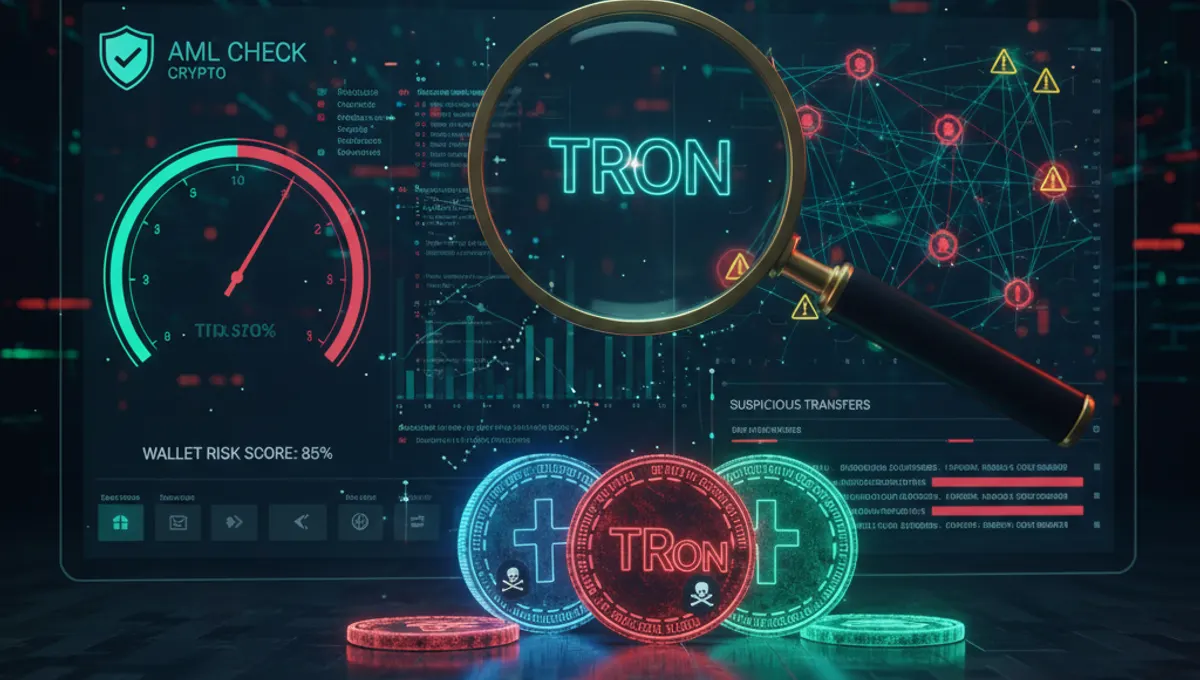
What Does AML Check Mean in Crypto
AML stands for Anti-Money Laundering. An AML check in crypto screening examines a wallet's transaction history and behavior to detect exposure to illicit activity, stolen funds, sanctions violations, or high-risk sources. Unlike traditional banking AML, which relies on identity verification and account monitoring, crypto AML checks use blockchain analytics to trace fund origins and flag wallets linked to known darknet markets, mixers, scams, or frozen exchange accounts. The check produces a risk score—typically ranging from low to critical—that indicates whether a wallet is safe to transact with. This matters because receiving tainted coins can result in exchange account freezes, compliance holds, or regulatory scrutiny.
AML Check Process: How It Works Step by Step
The AML check process follows these steps:
1. **Input wallet address**: You enter a Tron (TRX), Bitcoin, Ethereum, or USDT TRC20 address into the screening tool.
2. **Blockchain data retrieval**: The service queries the blockchain to retrieve the wallet's full transaction history.
3. **Risk analysis**: The tool cross-references transactions against known risk databases (darknet markets, mixers, stolen fund registries, sanctions lists).
4. **Scoring**: The system assigns a risk score based on exposure level and transaction patterns.
5. **Report generation**: Results are displayed instantly, showing risk level, flagged transactions, and exposure categories.
Most services complete this entire cycle in 10–60 seconds. Larger wallets with extensive transaction histories may take 1–3 minutes due to the volume of data analyzed.
Why AML Check Speed Matters for Crypto Transactions
Speed is critical in crypto because transactions are irreversible. Before you receive USDT or TRX from an unknown sender, a quick AML check can prevent you from accepting tainted coins that exchanges later freeze or flag. Institutional buyers and exchanges require instant AML screening before settlement. Delays in the AML check process can block time-sensitive trades or payment flows. Real-time screening also protects compliance officers and businesses from regulatory exposure—if you knowingly accept sanctioned funds or stolen crypto, you face legal liability. Fast AML checks enable you to make informed decisions without slowing down deal execution.
AML Check Requirements and What Gets Screened
An AML check requires only the wallet address itself—no personal information, identity verification, or KYC data. The screening covers:
- **Transaction history**: All inbound and outbound transfers linked to the address.
- **Fund origin**: Whether coins came from known mixers, darknet markets, or legitimate exchanges.
- **Sanctions exposure**: Whether the wallet has received funds from sanctioned entities or jurisdictions.
- **Stolen funds**: Whether coins were flagged as proceeds of theft or fraud.
- **Mixer interaction**: Whether the wallet has sent or received funds through privacy mixers.
- **Darknet exposure**: Whether the address has transacted with known darknet marketplace wallets.
- **Wallet age and activity**: How long the wallet has existed and its transaction frequency.
No KYC or personal data is needed to run the check, making it fast and privacy-preserving for the screener.
AML Check Fee and Cost Comparison
AML check fees vary by service and usage model:
- **Free tier**: Many services offer 1–5 free checks per month, typically completing in seconds.
- **Pay-per-check**: Individual checks range from $1–$10 depending on wallet complexity and data depth.
- **Subscription plans**: Monthly plans for businesses range from $50–$500, offering unlimited checks and detailed reporting.
- **Enterprise**: Custom pricing for exchanges and compliance teams requiring API integration and real-time monitoring.
The cost reflects data sources (blockchain indexing, sanctions list subscriptions, mixer detection databases) and report depth. Faster, more detailed reports cost more. For occasional users, free or low-cost per-check options are sufficient. For businesses handling frequent transactions, subscription models offer better value. Check the AML services listed on this site to compare pricing and features before choosing a provider.
How to Check a Wallet Before Receiving Crypto
Follow these steps to screen a wallet before accepting USDT, TRX, or BTC:
1. **Copy the sender's wallet address**: Ensure it's correct—typos or spoofed addresses are common.
2. **Visit a trusted AML screening service**: Use verified services from our curated AML services list on this site.
3. **Paste the address into the search field**: Select the correct blockchain (Tron, Bitcoin, Ethereum, etc.).
4. **Review the risk score**: Scores typically range from low (green) to critical (red).
5. **Check flagged categories**: Look for mixer exposure, darknet links, stolen funds, or sanctions hits.
6. **Decide**: Accept low-risk wallets; reject or investigate medium-to-critical risk addresses.
7. **Document the check**: Save the report for compliance records if required.
This takes 1–3 minutes and prevents you from receiving tainted coins that could freeze your exchange account later.
What Risk Score Levels Mean and When to Reject
Risk scores guide your decision to accept or reject a transaction:
- **Low (0–20%)**: Minimal exposure to known risk sources. Safe to accept.
- **Medium (21–50%)**: Some exposure to mixers or minor darknet links. Review transaction details; acceptable for most use cases.
- **High (51–80%)**: Significant mixer use, multiple darknet transactions, or stolen fund flags. Reject unless you have strong reason to trust the sender.
- **Critical (81–100%)**: Direct sanctions exposure, confirmed stolen funds, or active darknet marketplace wallet. Reject immediately.
Exchanges typically freeze accounts receiving critical-risk coins and may hold medium-risk funds pending review. If you receive tainted coins, contact your exchange's compliance team immediately—some will release funds after investigation, but delays are common. Proactive screening prevents these problems entirely.
Frequently asked questions
How long does an AML check take on a crypto wallet
Most AML checks complete in 10–60 seconds for standard wallets. Wallets with extensive transaction histories may take 1–3 minutes. Speed depends on blockchain network congestion and the service's data indexing. Real-time screening is the standard for modern AML tools, allowing instant risk assessment before you accept or send crypto.
What does AML check mean for cryptocurrency
AML check means screening a crypto wallet for exposure to illicit activity, stolen funds, sanctions violations, mixers, and darknet markets. It analyzes blockchain transaction history to assign a risk score. The check protects you from receiving tainted coins that exchanges may freeze, and helps comply with regulatory requirements for crypto businesses.
Do I need to pay for an AML check on crypto wallets
No. Many services offer free AML checks, typically 1–5 per month. Individual checks cost $1–$10, and monthly subscriptions range from $50–$500 for unlimited screening. Choose based on your usage frequency. Occasional users benefit from free tiers; businesses handling frequent transactions should consider paid plans for better value and detailed reporting.
What happens if my wallet gets a high AML risk score
A high or critical AML risk score means your wallet has exposure to mixers, darknet markets, stolen funds, or sanctions. Exchanges may freeze your account or hold funds pending compliance review. To resolve this, contact your exchange's compliance team with transaction documentation. Proactive AML screening before receiving coins prevents these freezes entirely.
Can I check a Tron or USDT TRC20 address for AML risk
Yes. Most modern AML screening services support Tron (TRX) and USDT TRC20 addresses, along with Bitcoin and Ethereum. The check process is identical: paste the address, review the risk score, and check for flagged categories like mixers or darknet exposure. Use verified services from trusted AML provider lists to ensure accurate screening.