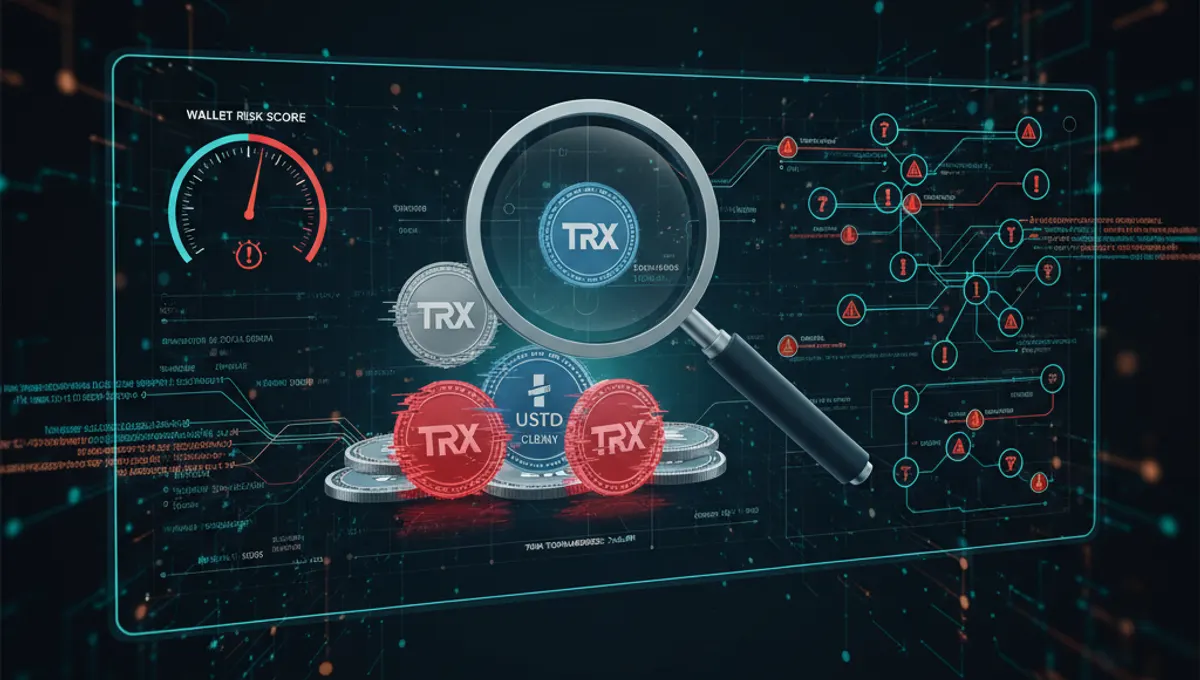
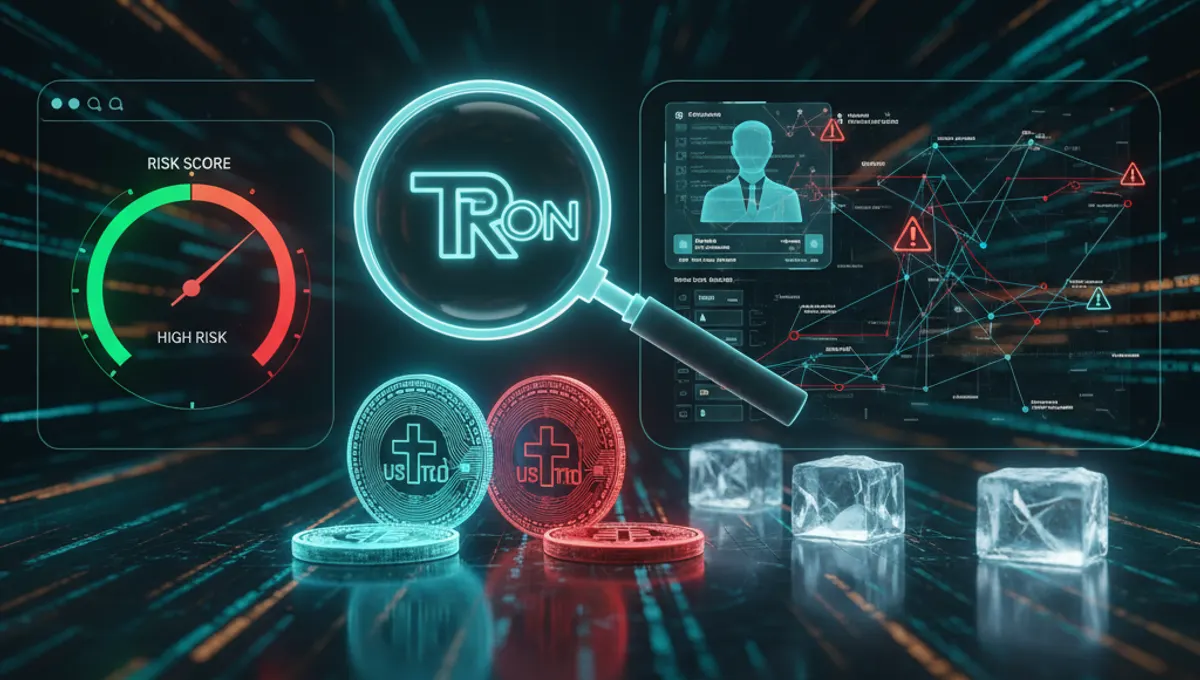
What Is a Tron Address and Why Check It
A Tron address is a unique identifier on the Tron blockchain, formatted as a 34-character string starting with 'T' (for mainnet). It represents a wallet that holds TRX tokens or TRC20 assets like USDT. Checking a Tron address means running it through an AML screening tool to detect whether the wallet has received funds from high-risk sources: cryptocurrency mixers, darknet markets, scams, stolen funds, or sanctioned entities. Exchange platforms, custodians, and institutional traders perform Tron address checks as part of Know Your Transaction (KYT) compliance. A single tainted transaction in a wallet's history can trigger account freezes or transaction rejections, even if the current owner is innocent. This is why checking before receiving large amounts of USDT TRC20 or TRX is a practical risk-management step.
How AML Risk Scoring Works for Tron Wallets
An AML risk score is a numerical rating (typically 0–100 or low/medium/high) assigned to a Tron address based on its transaction history and associations. The scoring algorithm examines: (1) whether the address has received funds from known mixers or tumblers; (2) links to darknet market wallets; (3) involvement in scams or theft; (4) sanctions list matches; (5) transaction patterns that suggest money laundering. A low risk score means the wallet has a clean history and minimal exposure to illicit activity. A medium or high score indicates the address has received funds from suspicious sources or exhibits risky behavior. Risk scores are not binary judgments of guilt—they flag exposure to tainted coins. An address can have a medium score because it received a small amount from a mixer years ago, or because it interacted with a gambling platform. Understanding the score's components helps you decide whether to accept a transaction or request clarification from the sender.
Step-by-Step: How to Check a Tron Address
Follow these steps to perform a Tron address check:
1. Copy the Tron address (34 characters, starting with 'T') from the wallet or transaction you want to screen.
2. Visit a trusted AML screening service listed on our verified AML Services page—these tools specialize in Tron address lookup and provide detailed risk reports.
3. Paste the address into the search field and initiate the scan.
4. Review the risk score and detailed findings: any mixer exposure, darknet links, sanctions matches, or stolen fund flags.
5. Check the transaction history summary to see which sources contributed to the risk rating.
6. Decide whether to proceed with the transaction based on your risk tolerance and compliance requirements.
7. If the score is high or flagged, contact the sender to clarify the source of funds or decline the transaction.
Most AML services return results within seconds. For high-value transactions (especially USDT TRC20), running a check before accepting funds is standard practice.
What Tron Address Risk Score Levels Mean
Risk score interpretation varies by service, but common thresholds are:
**Low Risk (0–30):** The address has a clean transaction history with no detected links to mixers, darknet markets, scams, or sanctions. Receiving funds from a low-risk address is generally safe from a compliance perspective.
**Medium Risk (31–70):** The address has some exposure to suspicious activity—for example, it received a small amount from a mixer, or it interacted with a gambling platform. Medium-risk addresses warrant caution; verify the sender's identity and the transaction purpose before accepting large amounts.
**High Risk (71–100):** The address has significant exposure to illicit activity: direct mixer involvement, darknet market links, theft flags, or sanctions matches. Accepting funds from a high-risk address can trigger exchange freezes or regulatory scrutiny. Most institutions reject high-risk transactions outright.
Your acceptable threshold depends on your role: retail users may accept medium-risk addresses if they trust the sender; exchanges and custodians typically reject anything above low risk to maintain compliance.
Common Risk Flags: Mixers, Darknet, Sanctions, and Stolen Funds
When you check a Tron address, the report may flag specific risk categories:
**Mixer Exposure:** The wallet received funds that passed through a cryptocurrency mixer or tumbler—services designed to obscure transaction trails. Mixer involvement doesn't prove wrongdoing but signals an attempt to hide the source of funds.
**Darknet Market Links:** The address has received funds from wallets associated with darknet marketplaces. This is a high-risk indicator.
**Sanctions Matches:** The address is linked to individuals or entities on government sanctions lists (OFAC, EU, UN, etc.). Transacting with sanctioned addresses is illegal in most jurisdictions.
**Stolen Funds:** The address received cryptocurrency from theft, hacks, or fraud. Possessing stolen funds can result in civil liability and account freezes.
**Gambling and High-Risk Services:** The address interacted with gambling platforms or other high-risk services. While not illegal, this may increase compliance scrutiny.
Each flag carries different weight: sanctions matches are deal-breakers; mixer exposure alone is lower-risk but warrants verification.
What Happens If You Receive Tainted USDT or TRX
If you receive tainted USDT TRC20 or TRX from a flagged address, several outcomes are possible:
**Exchange Account Freeze:** When you deposit the tainted coins to an exchange, the platform's AML system may flag the transaction. The exchange can freeze your account pending investigation, delaying or blocking your ability to withdraw or trade.
**Transaction Rejection:** Some exchanges reject deposits from high-risk addresses outright, returning the funds to the sender.
**Regulatory Inquiry:** If the tainted funds are linked to sanctions or theft, you may receive a compliance inquiry from the exchange or regulator.
**Forced Liquidation:** In rare cases, exchanges may liquidate tainted holdings and hold the proceeds pending legal resolution.
To avoid this: always check the Tron address before accepting large transfers. If you've already received tainted coins, contact the exchange's compliance team to explain the situation and provide documentation of the transfer. Innocent receipt of tainted funds is generally defensible if you can demonstrate due diligence.
Best Practices for Screening Tron Addresses Before Transactions
Implement these practices to minimize risk:
**Check Before Receiving:** Always run a Tron address check before accepting significant amounts of USDT TRC20 or TRX, especially from unfamiliar senders.
**Use Verified AML Services:** Rely on the trusted AML screening tools listed on our verified AML Services page. These services maintain up-to-date risk databases and provide detailed reports.
**Set a Risk Threshold:** Decide in advance what risk score you will accept. For retail users, low-risk addresses are safest; for institutional traders, medium-risk may be acceptable with additional verification.
**Verify the Sender:** If an address shows medium or high risk, contact the sender directly (via a separate channel) to confirm the transaction source and purpose.
**Document Your Due Diligence:** Keep records of AML checks you performed. This demonstrates compliance effort if questioned later.
**Monitor Ongoing Risk:** For recurring counterparties, periodically re-check their addresses to catch changes in risk status.
**Avoid Unsolicited Transfers:** Be suspicious of unexpected transfers from unknown addresses, especially if they carry high risk scores.
Frequently asked questions
What does a tron address checker do?
A Tron address checker scans a TRX wallet for AML risk by examining its transaction history for links to mixers, darknet markets, scams, sanctions, and stolen funds. It assigns a risk score and flags suspicious activity. The tool helps you decide whether to accept or reject a transaction based on the sender's wallet history.
How do I look up a tron address?
Copy the Tron address (34 characters starting with 'T') and paste it into a verified AML screening service from our AML Services page. The tool will return a risk score and detailed report within seconds. You can also view basic transaction history on public Tron block explorers, but AML-specific tools provide compliance-focused risk analysis.
What does a tron address mean?
A Tron address is a unique wallet identifier on the Tron blockchain, formatted as a 34-character string beginning with 'T'. It represents an account that holds TRX tokens and TRC20 assets like USDT. Each address is derived from a private key and is used to send, receive, and store cryptocurrency on the Tron network.
Can I check a tron wallet address for free?
Some AML services offer limited free Tron address checks, though detailed reports often require a paid subscription. Our verified AML Services page lists options with transparent pricing and free trial tiers. For critical compliance decisions, paid services provide more comprehensive risk data and customer support.
What risk score should I accept for a tron address?
Low-risk addresses (0–30) are safest and carry minimal compliance concern. Medium-risk (31–70) warrants verification of the sender's identity and transaction purpose. High-risk (71–100) should generally be rejected unless you have strong reason to trust the sender. Your threshold depends on your role: retail users should favor low-risk; institutions may have stricter policies.