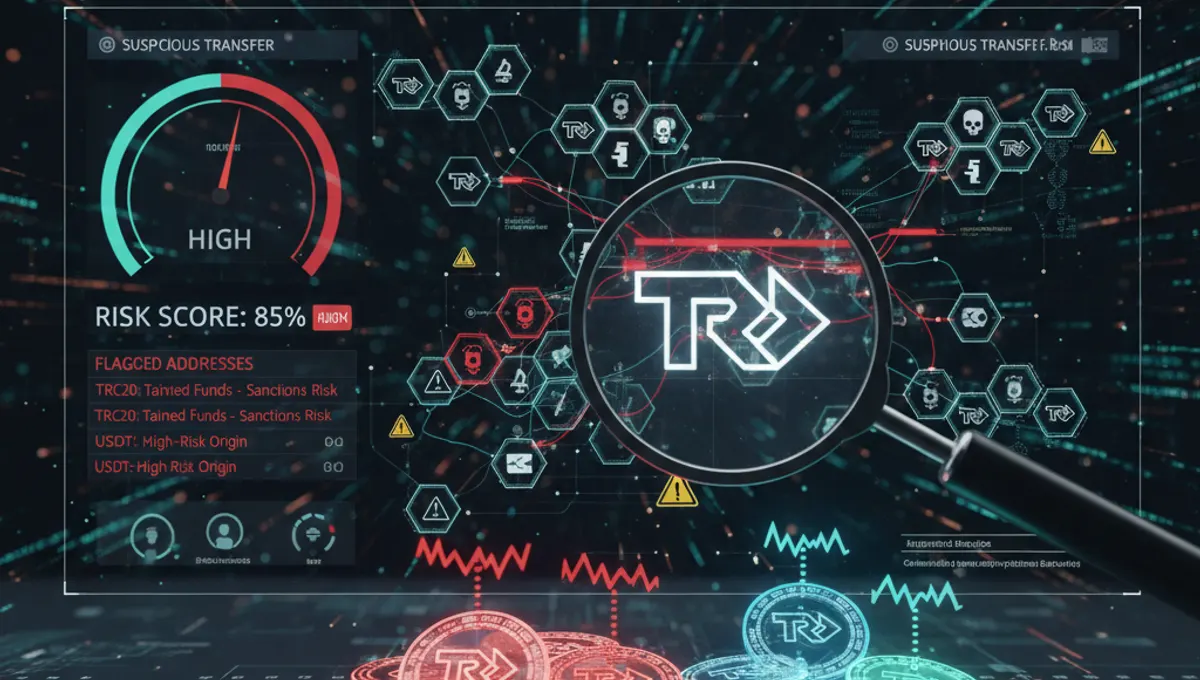
What Counts as Suspicious Activity in Crypto AML Screening
Suspicious activity in AML checks refers to transaction patterns and wallet behaviors that suggest illicit use or high compliance risk. Common examples include funds flowing from known mixers (services that obscure transaction origins), darknet marketplace addresses, wallets flagged for theft or fraud, and entities on sanctions lists. Gambling platforms, ransomware payment addresses, and rapid fund consolidation also trigger alerts. Each activity type carries different risk weight: mixer exposure might raise your score moderately, while direct sanctions list matching creates immediate high-risk status. AML check requirements vary by exchange, but most flag any wallet with prior exposure to these categories. The goal of an AML check process is to prevent your account from receiving coins that could later freeze your funds or trigger regulatory action.
How AML Risk Scoring Works for Suspicious Activity
An AML risk score is a numerical rating (typically 0–100 or low/medium/high) assigned after analyzing a wallet's transaction history. The scoring system examines inbound and outbound transfers, identifies counterparty risk, and matches addresses against known databases of illicit activity. Suspicious activity examples that increase your score include: transactions from mixer services, deposits from darknet markets, funds originating from stolen cryptocurrency, connections to sanctioned jurisdictions, and rapid movement through multiple wallets. Each risk factor is weighted; a single mixer transaction might add 15–30 points, while a sanctioned entity match could push the score into critical range. The AML check fee typically covers this analysis. Understanding your risk score helps you decide whether to accept a transfer. Most exchanges consider scores above 70–80 as high-risk and may freeze the account or require additional documentation.
Common Suspicious Activity Patterns in Crypto Wallets
Recognizing specific patterns helps you spot risky transfers before they arrive. Mixer exposure occurs when coins pass through tumblers or privacy services designed to obscure transaction trails; these are flagged because legitimate users rarely need such services. Darknet marketplace activity shows coins moving to or from known illegal market addresses. Stolen funds are identified when a wallet receives cryptocurrency reported as theft to blockchain analysis firms. Sanctioned entity connections link wallets to individuals, organizations, or jurisdictions under international sanctions. Gambling platform exposure indicates funds flowing to high-risk gaming services. Ransomware payments are traced to known extortion campaigns. Rapid consolidation—moving coins through many addresses in short timeframes—suggests an attempt to obscure origin. Each pattern triggers different alert levels in an AML check process. When evaluating whether to accept coins, review the specific suspicious activity examples flagged in your AML check report.
How to Check a Wallet Before Receiving Suspicious Coins
Before accepting any transfer, run an AML check on the sending wallet address. Step 1: Obtain the sender's wallet address (Bitcoin, Ethereum, Tron, or USDT TRC20). Step 2: Visit a trusted AML screening service—our curated list of verified AML services on this site includes platforms that provide transparent risk scoring and detailed reports. Step 3: Enter the address and review the risk score and flagged suspicious activity examples. Step 4: Check the report for specific red flags: mixer exposure, darknet connections, sanctions matches, or stolen fund indicators. Step 5: Decide based on your risk tolerance and exchange requirements. Most exchanges require an AML check fee (typically $1–$10 per address) but offer free or low-cost initial screening. If the report shows high-risk activity, decline the transfer or request clarification from the sender. This step prevents you from receiving tainted coins that could freeze your account.
What Happens When Your Wallet Receives Tainted Coins
Receiving cryptocurrency flagged for suspicious activity can trigger immediate consequences. If you deposit tainted coins into an exchange, the platform's automated AML check process may flag your account during deposit screening. Exchanges typically freeze accounts holding coins linked to mixers, darknet markets, or stolen funds pending investigation. This freeze can last days to weeks and may result in account closure or asset seizure if the coins are confirmed as proceeds of crime. Your exchange may require proof of legitimate acquisition or refuse to process withdrawals. In some jurisdictions, knowingly receiving stolen cryptocurrency can expose you to legal liability. To protect yourself, always run an AML check on incoming transfers before accepting them. If you already hold suspicious coins, contact your exchange's compliance team immediately to report the issue and request guidance. Transparency and early disclosure typically result in better outcomes than attempting to move the coins.
AML Check Requirements and Risk Thresholds by Exchange
Different exchanges enforce different AML check requirements and risk thresholds. Most major platforms require an AML check process for deposits above certain amounts (often $1,000–$10,000) or flag all deposits for automated screening regardless of size. Risk thresholds vary: some exchanges reject any wallet with a score above 50, others allow scores up to 70 if you provide additional documentation. Specific suspicious activity examples that trigger automatic rejection include direct sanctions list matches, confirmed stolen funds, and active ransomware payment addresses. Some exchanges use tiered responses: low-risk scores pass instantly, medium-risk scores require KYC verification or additional information, and high-risk scores result in account freeze or rejection. The AML check fee is typically absorbed by the exchange or passed to the user. Before depositing, check your exchange's published AML policy or contact support to understand their specific thresholds. Using our verified AML services list ensures you screen wallets against the same standards most exchanges use.
Avoiding Suspicious Activity: Best Practices for Receiving Crypto
Protect yourself by establishing a routine AML check process before accepting any transfer. First, always request the sender's wallet address in advance and screen it before confirming the transaction. Second, use established exchanges or peer-to-peer platforms with built-in AML screening rather than direct wallet-to-wallet transfers from unknown sources. Third, be cautious of unsolicited offers, unexpected winnings, or transfers from unfamiliar parties—these often involve tainted coins. Fourth, if you receive coins from a legitimate source (employer, exchange withdrawal, peer), ask them to confirm the coins are not linked to mixers or high-risk activity. Fifth, maintain records of all transfers and their AML check results in case your exchange requires documentation. Sixth, if you suspect suspicious activity in your own wallet, run an AML check immediately and report findings to your exchange. These practices reduce the risk of account freezes and ensure you maintain compliance with exchange policies.
Frequently asked questions
What suspicious activity examples trigger an AML freeze on my exchange account
Mixer exposure, darknet marketplace connections, stolen funds, sanctioned entity matches, and ransomware payments are the primary triggers. Most exchanges freeze accounts automatically when deposits are flagged for these activities. Rapid consolidation through multiple wallets and gambling platform exposure also raise red flags. Contact your exchange's compliance team immediately if your account is frozen to understand the specific suspicious activity flagged.
How much does an AML check fee cost to screen a wallet before receiving coins
AML check fees typically range from free to $10 per address, depending on the service and report depth. Many exchanges offer free basic screening for account deposits. Detailed reports with full suspicious activity analysis usually cost $2–$10. Our verified AML services list includes options at various price points. Some services offer bulk discounts for multiple address checks.
Can I receive coins from a wallet with mixer exposure without risking my account
Mixer exposure is a significant red flag but not always automatic rejection. Risk depends on your exchange's AML check requirements and the mixer's prominence in the transaction history. Some exchanges flag mixer exposure as medium-risk and allow deposits with additional KYC verification. Others reject outright. Before accepting such a transfer, contact your exchange to confirm their policy on mixer-exposed wallets to avoid account freeze.
What is the difference between suspicious activity and confirmed stolen funds in AML screening
Suspicious activity indicates patterns or connections that raise compliance concerns but lack definitive proof of crime (e.g., mixer use, gambling platform exposure). Confirmed stolen funds are cryptocurrency explicitly reported as theft to blockchain analysis firms and matched to your wallet. Confirmed theft triggers immediate high-risk status and likely account freeze. Suspicious activity allows more flexibility depending on exchange policy and additional documentation.
How do I check if my own wallet has suspicious activity before depositing to an exchange
Run an AML check on your wallet address using a trusted screening service from our verified AML services list. Enter your address, review the risk score, and examine any flagged suspicious activity examples. If your wallet shows mixer exposure, darknet connections, or other red flags, contact your exchange's compliance team before depositing to clarify their policy and avoid account freeze.