What Is Crypto Market Transactions Monitoring?
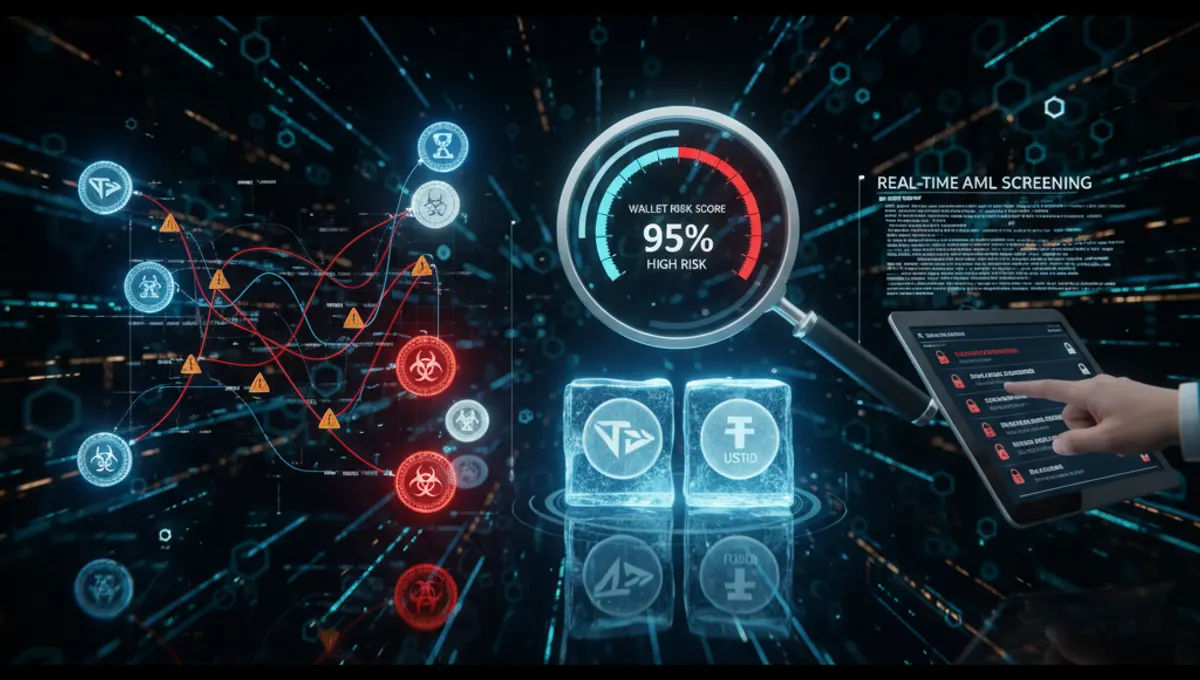
Crypto market transactions monitoring combines blockchain analysis with AML (anti-money laundering) screening to watch transaction flows across Bitcoin, Ethereum, Tron, and stablecoin networks. The system tracks wallet-to-wallet transfers, identifies the source and destination of funds, and cross-references addresses against sanctions lists, known darknet markets, and theft databases. When a transaction matches a risk category—such as mixer output, gambling platform withdrawal, or stolen coin—the monitoring system flags it immediately. This differs from one-time wallet checks: monitoring runs continuously, updating risk scores as new on-chain data emerges. Exchanges, custodians, and compliance teams use monitoring to enforce KYC/KYT (Know Your Customer / Know Your Transaction) policies and prevent regulatory violations.
How Does Real-Time AML Screening Work in Transaction Monitoring?
Real-time AML screening operates through three layers. First, the system ingests blockchain data—every transaction on Bitcoin, Ethereum, Tron, and other networks—within seconds of confirmation. Second, it applies heuristic rules and machine learning models to classify addresses by risk: legitimate exchanges, known mixers, darknet markets, sanctioned entities, and theft sources. Third, it compares incoming and outgoing transactions against these classifications and generates a risk score. When you receive a transfer, the monitoring system traces the sender's wallet history backward through multiple hops, identifying the original source. If the source is flagged—for example, a mixer or a sanctioned address—the transaction receives a high-risk score. The system then alerts you or your exchange, allowing you to accept, hold, or reject the transfer based on your compliance threshold.
Key Risk Categories in Crypto Market Transactions Monitoring
Effective monitoring screens for specific risk categories that trigger regulatory concern or exchange freezes. Stolen funds are crypto taken from hacks, phishing, or unauthorized access; receiving these can result in account suspension even if you didn't know they were stolen. Mixer outputs are transactions routed through privacy-mixing services, which obscure the original source and signal potential money laundering. Darknet market proceeds include transfers from known dark web marketplaces selling illegal goods. Sanctioned addresses belong to individuals, entities, or countries under government sanctions; receiving from these violates OFAC (Office of Foreign Assets Control) rules in the US and similar regulations elsewhere. Gambling and high-risk services include withdrawals from unregulated casinos or betting platforms. Scam proceeds are funds from Ponzi schemes, rug pulls, or fraud. Monitoring systems assign higher risk scores to transactions touching multiple risk categories, and lower scores to transfers from regulated exchanges or known legitimate sources.
How to Check a Crypto Transaction Before It Settles
Before accepting a large transfer, follow these steps to monitor and verify the transaction: (1) Obtain the sender's wallet address and the transaction hash (txid). (2) Use a blockchain explorer (such as official project documentation for the relevant chain) to view the transaction details, including the sender, receiver, amount, and timestamp. (3) Check the sender's wallet history by reviewing their past transactions—look for patterns like frequent mixer interactions or darknet connections. (4) Run the sender's address through an AML screening service to obtain a risk score and see flagged categories. (5) If the risk score is high or the source is unclear, contact the sender to confirm legitimacy before accepting. (6) If you operate an exchange or custody service, compare the risk score against your internal compliance threshold—typically low-risk (0–20%), medium-risk (20–50%), or high-risk (50%+)—and reject or hold transfers that exceed your limit. Services listed on our AML Services page offer real-time monitoring dashboards that automate these checks.
Understanding Risk Score Thresholds in Transaction Monitoring
Risk scores in crypto market transactions monitoring range from 0% (clean, no red flags) to 100% (confirmed high-risk source). Most exchanges and custodians set internal thresholds to determine which transactions to accept, hold, or block. A score of 0–20% typically indicates the funds originated from a regulated exchange, known legitimate business, or long-held personal wallet—safe to accept. A score of 20–50% suggests some exposure to intermediate-risk activity, such as a wallet that once received mixer output or has limited transaction history—may require additional review. A score of 50–100% signals direct connection to theft, sanctions, darknet markets, or repeated mixer use—most exchanges reject these outright to avoid compliance violations. Your threshold depends on your jurisdiction, business model, and risk appetite. Retail users often accept scores up to 30%, while regulated institutions typically reject anything above 20%. Always document your decision and the risk score for audit purposes.
What Happens When Tainted Crypto Is Detected During Monitoring?
When monitoring detects tainted or high-risk crypto, several outcomes are possible depending on where the funds are held. If the transaction is still pending (not yet confirmed), you can reject it before settlement, preventing the funds from entering your wallet. If the funds have already arrived at your exchange or custodial wallet, the exchange may freeze your account pending investigation—this can last days or weeks. During a freeze, you cannot withdraw, trade, or transfer the funds. The exchange will request proof of the source of the funds; if you cannot demonstrate legitimate acquisition, the account may remain frozen or the funds may be seized. If the crypto is flagged as stolen, law enforcement may issue a recovery order, and the exchange will cooperate. If the source is sanctioned, the exchange must comply with government orders and may permanently forfeit the funds. To avoid this, use pre-transaction monitoring: check incoming transfers before accepting them, and reject anything with a risk score above your threshold. Our curated AML Services page lists tools that provide this monitoring before settlement.
Crypto Market Transactions Monitoring vs. One-Time Wallet Checks
One-time wallet checks scan a single address at a moment in time, providing a snapshot risk score. Monitoring continuously tracks that address and all incoming/outgoing transactions, updating the risk profile as new data emerges. A wallet may show low risk today but receive a large mixer transfer tomorrow, raising its score. Monitoring alerts you to this change; a one-time check would not. For individuals, one-time checks are sufficient before receiving a specific transfer. For exchanges, custodians, and businesses handling frequent transactions, continuous monitoring is essential to meet regulatory requirements and prevent compliance violations. Monitoring also provides transaction-level detail: it can tell you exactly which past transaction caused a wallet's risk score to rise, helping you make informed decisions. If you receive crypto regularly, set up monitoring on your wallet address through an AML service; if you receive infrequently, run a one-time check before each significant transfer. Start with the verified services on our AML Services page to ensure you're using compliant, reliable tools.
Frequently asked questions
How do I monitor incoming crypto transactions for AML risk?
Obtain the sender's wallet address and transaction hash, then run it through an AML screening service to get a risk score and flagged categories. Check the sender's transaction history for mixer use, darknet connections, or theft sources. If the score exceeds your compliance threshold (typically 20–50%), reject or hold the transfer. Use continuous monitoring services for frequent transactions.
What risk score should I reject in crypto transactions?
Most exchanges reject scores above 50% (high-risk). Retail users often accept up to 30%, while regulated institutions typically reject anything above 20%. Your threshold depends on your jurisdiction and risk appetite. Always document your decision for audit purposes. If unsure, consult the AML services listed on our verified services page.
Can I recover crypto if I receive tainted funds?
Recovery depends on the source. If the crypto is flagged as stolen, law enforcement may issue a recovery order, and your exchange will cooperate. If it's sanctioned, the funds may be permanently seized. If it's mixer output, recovery is unlikely. The best approach is to reject high-risk transfers before they settle in your wallet using pre-transaction monitoring.
What happens if my exchange detects tainted crypto in my account?
Your account may be frozen pending investigation. The exchange will request proof of the source; if you cannot provide it, the account may remain frozen or funds seized. If the source is sanctioned or stolen, the exchange must comply with government orders. Prevent this by monitoring transactions before accepting them.
How does crypto market transactions monitoring differ from wallet screening?
Wallet screening is a one-time snapshot of a single address. Monitoring continuously tracks that address and all transactions, updating risk scores as new data emerges. Monitoring alerts you to changes; screening does not. For frequent transactions, use continuous monitoring; for occasional transfers, one-time checks suffice.