What Is a Tron Transaction and Why Check It
A Tron transaction is a record of TRX or USDT TRC20 movement on the Tron blockchain. Each transaction has a unique hash (a long alphanumeric string), sender address, receiver address, amount, timestamp, and fee. Unlike traditional banking, Tron transactions are permanent and visible to anyone on the public ledger. Checking a Tron transaction means verifying the addresses involved, confirming the amount transferred, and screening both parties for AML risk. You should check Tron transactions before accepting payment because tainted coins—funds stolen from exchanges, linked to scams, or passed through mixers—can expose you to compliance risk. Exchanges and custodians may freeze accounts holding flagged funds, and receiving sanctioned funds violates regulations in most jurisdictions.
How to Check a Tron Address Before Receiving Funds
To check a Tron wallet address, follow these steps:
1. Obtain the sender's Tron address (starts with T).
2. Visit a blockchain explorer or AML screening service.
3. Enter the address into the search field.
4. Review the address history: total transactions, balance, first and last activity dates.
5. Look for red flags: rapid fund movement, connections to known mixers, large volumes from darknet markets, or sanctioned entity links.
6. Check the risk score: services assign scores from low to critical based on transaction history and known risk factors.
7. Review the taint analysis: what percentage of the address's funds come from high-risk sources.
8. Decide whether to accept the payment based on your risk tolerance and compliance requirements.
If the address shows high-risk activity or tainted funds, you can request payment from a different address or decline the transaction. For USDT TRC20 specifically, check both the Tron address and the token contract to ensure legitimacy.
Understanding AML Risk Scores for Tron Addresses
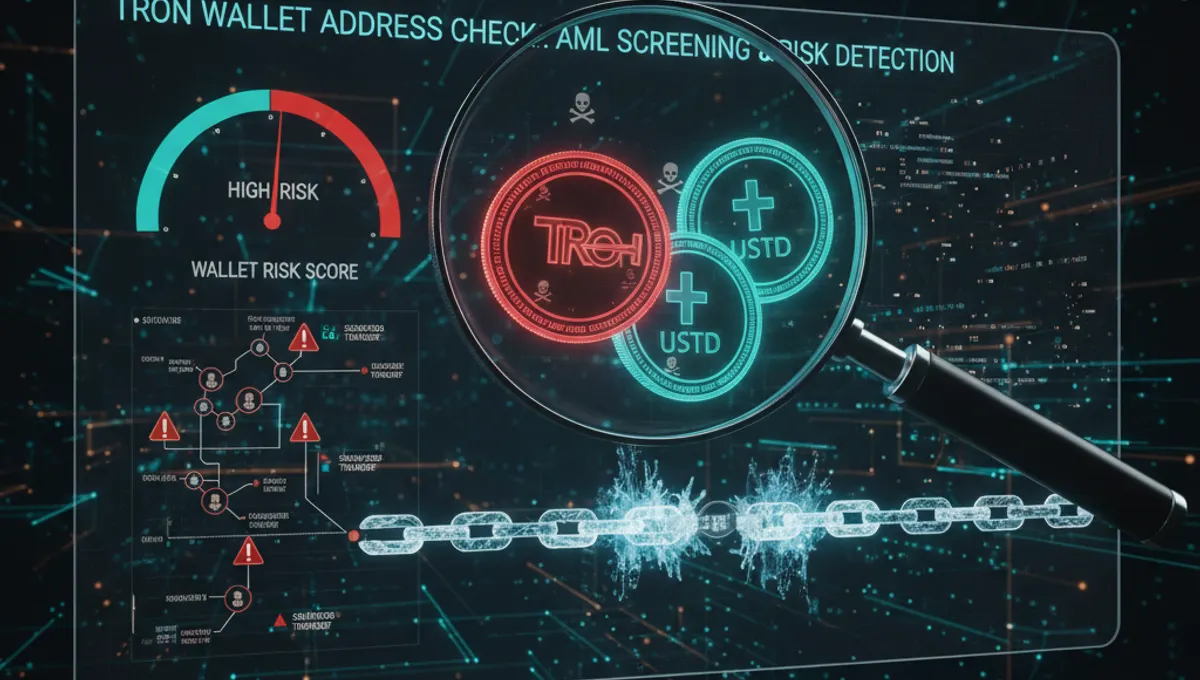
An AML risk score is a numerical rating that reflects the likelihood an address or transaction is associated with illicit activity. Risk scores typically range from 0 (very low risk) to 100 (critical risk), though some services use color codes (green, yellow, red) or categorical labels.
Risk factors that increase a Tron address's score include:
- Transactions with known mixers or tumblers
- Deposits from or withdrawals to darknet marketplaces
- Connections to scam addresses or Ponzi schemes
- Links to sanctioned individuals or entities
- Rapid fund churn or layering patterns
- Stolen funds flagged by exchanges or law enforcement
Acceptable risk thresholds vary by use case. Exchanges and custodians typically reject addresses with scores above 50–70. Peer-to-peer transactions may tolerate higher scores depending on your compliance policy. Always check the risk score before accepting large transfers or funds destined for regulated accounts.
How to Check Tron Wallet Balance and Transaction History
To check a Tron wallet address balance and transaction history:
1. Go to a Tron blockchain explorer (such as official Tron project documentation resources).
2. Paste the Tron address (T-address) into the search bar.
3. View the wallet's current TRX balance and any USDT TRC20 or other token balances.
4. Scroll through the transaction list to see all incoming and outgoing transfers.
5. Click on individual transactions to view details: sender, receiver, amount, timestamp, transaction fee, and confirmation status.
6. Note the wallet's age (when it first received funds) and activity frequency.
7. For AML purposes, identify the sources of large deposits and the destinations of large withdrawals.
This information helps you understand whether the address is active, dormant, or recently created. New addresses with sudden large inflows may indicate fresh scam proceeds or mixer output. Established addresses with consistent, low-risk activity are generally safer.
Red Flags: When a Tron Address Is High-Risk
Several patterns indicate a Tron address carries high AML risk:
- Mixer or tumbler connections: Funds routed through privacy-mixing services suggest an attempt to obscure the source.
- Darknet market links: Addresses that receive deposits from known darknet marketplaces are flagged as high-risk.
- Rapid fund movement: Coins that move through multiple addresses in quick succession (layering) may indicate money laundering.
- Stolen funds: Addresses holding coins flagged as stolen by exchanges or law enforcement.
- Sanctioned entity exposure: Addresses linked to individuals or organizations on OFAC or other sanctions lists.
- Scam or fraud history: Addresses associated with Ponzi schemes, rug pulls, or phishing attacks.
- Gambling platform connections: Some compliance frameworks flag gambling deposits as higher-risk.
If you receive funds from a high-risk address, document the transaction and consider reporting it to your exchange or compliance officer. Holding tainted coins can lead to account freezes, forced liquidation, or regulatory penalties.
Using AML Screening Services to Check Tron Transactions
AML screening services provide automated risk assessment for Tron addresses and transactions. These tools analyze blockchain data, cross-reference addresses against known risk databases, and assign risk scores in seconds.
Key features of a reliable AML check service:
- Real-time risk scoring based on transaction history
- Taint analysis showing the percentage of funds from high-risk sources
- Sanctions list screening (OFAC, EU, UN, etc.)
- Darknet and mixer detection
- Stolen funds flagging
- Detailed transaction history and address clustering
- API access for automated wallet screening
When choosing a service, verify it supports Tron and USDT TRC20, offers clear documentation of its risk methodology, and provides detailed reports. Our curated list of verified AML services on this site includes trusted providers that specialize in Tron screening—starting there ensures you use a service with proven accuracy and compliance credibility. Many services offer free basic checks with limits on queries per day; paid plans unlock unlimited screening and API access for businesses.
What to Do If Your Tron Coins Are Flagged as Tainted
If you receive Tron coins flagged as tainted or high-risk:
1. Do not panic. Holding tainted coins is not illegal; using them knowingly for money laundering is.
2. Document the transaction: save the transaction hash, sender address, and the date received.
3. Investigate the source: contact the sender to understand where the funds originated.
4. Report to your exchange or custodian if you suspect fraud or theft.
5. Consider the risk: if the coins are flagged for sanctions exposure or stolen funds, most exchanges will freeze them or your account.
6. Consult compliance or legal counsel if the amount is significant or the risk category is sanctions-related.
7. Do not attempt to launder the coins through mixers; this is illegal and increases your risk.
Many exchanges automatically freeze accounts holding flagged USDT TRC20 or TRX. If your account is frozen, contact the exchange's compliance team with documentation of the transaction source. Legitimate, documented receipt of funds (e.g., from a known business partner) may allow the freeze to be lifted after review.
Frequently asked questions
Can I check a Tron transaction for free
Yes. Tron blockchain explorers are free and allow you to search any transaction hash or address. However, free explorers do not provide AML risk scoring or taint analysis. For those features, you need a paid AML screening service, though many offer limited free queries per day. Check our verified AML services list for options that fit your budget.
What does a Tron transaction hash look like
A Tron transaction hash is a 64-character hexadecimal string (numbers 0–9 and letters a–f) that uniquely identifies a transaction on the Tron blockchain. Example format: 0x1a2b3c4d5e6f7g8h9i0j1k2l3m4n5o6p7q8r9s0t. You can paste this hash into a Tron explorer to view all transaction details.
How long does it take to check a Tron address for AML risk
Checking a Tron address on a blockchain explorer takes seconds. AML risk scoring via a dedicated service also completes in seconds to a few minutes, depending on the service's database size and your internet connection. Real-time screening is standard for most modern AML platforms.
What happens if I receive USDT TRC20 from a sanctioned address
Receiving USDT TRC20 from a sanctioned address is not illegal, but holding or using it may violate sanctions regulations depending on your jurisdiction. Most exchanges automatically freeze accounts holding sanctioned funds. If this occurs, contact your exchange's compliance team with documentation of the transaction source to request a review.
Can I reverse a Tron transaction if the address is high-risk
No. Tron transactions are immutable once confirmed on the blockchain. You cannot reverse or cancel a transaction. If you sent funds to a high-risk address by mistake, your only option is to contact the recipient and request a refund. Always check the recipient's address and risk score before sending funds.