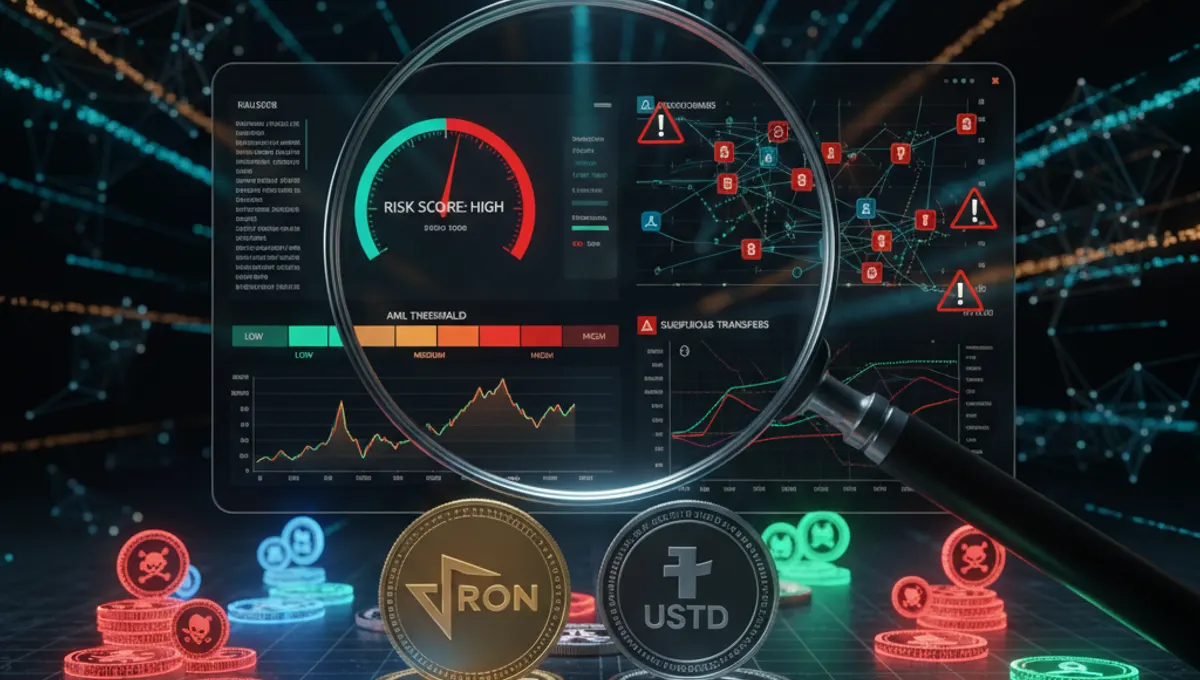
What Does KYT Mean in Cryptocurrency?
KYT crypto meaning refers to the automated screening of blockchain transactions to identify suspicious activity and risk. The process examines transaction history, wallet behavior, and fund origins to assign a risk score. KYT differs from crypto KYC meaning: KYC verifies who you are when you join an exchange, while KYT examines what your money is and where it came from. A KYT system flags transactions linked to darknet markets, mixers, ransomware, gambling platforms, and sanctioned entities. When you receive USDT on Tron or Bitcoin from an unknown source, KYT screening can reveal whether those coins have been involved in theft, fraud, or regulatory violations. This distinction matters because exchanges and custodians use KYT to decide whether to accept or freeze your deposit.
How Does KYT Crypto Screening Work?
KYT crypto systems use blockchain analytics to trace fund movement across addresses and wallets. The process follows these steps: (1) A transaction is submitted for screening. (2) The system queries its database of known high-risk addresses—those linked to hacks, darknet markets, sanctions lists, and stolen funds. (3) The transaction history is traced backward to identify the source wallet and forward to see where funds flow next. (4) Machine learning models assess behavioral patterns: sudden large transfers, rapid consolidation, or mixing activity. (5) A risk score is generated, typically ranging from 0 (clean) to 100 (high risk). Exchanges and payment processors use this score to decide whether to accept the transaction. For example, a USDT TRC20 transfer from a wallet flagged as a mixer will receive a higher risk rating than one from a known exchange cold wallet.
KYT Crypto Meaning vs. KYC: What's the Difference?
Crypto KYC meaning refers to Know Your Customer—the identity verification process required when you open an exchange account. KYT and KYC work together but serve different purposes. KYC confirms you are who you claim to be; KYT confirms your money is not stolen or sanctioned. You can pass KYC but fail KYT if your deposit comes from a flagged source. A crypto billionaire meaning someone with substantial holdings—still faces KYT screening when moving large amounts. Exchanges require both: they verify your identity (KYC) and screen incoming funds (KYT). If your Bitcoin or USDT fails KYT checks, the exchange may freeze your account even if your personal identity is verified. This is why checking a wallet's risk score before receiving funds is critical.
What Is a Crypto Transaction Meaning and How Does KYT Apply?
A crypto transaction meaning is the transfer of digital assets from one blockchain address to another, recorded permanently on the ledger. Every transaction has a sender, receiver, amount, timestamp, and transaction ID. KYT applies by analyzing each transaction's context: Is the sender a known exchange, mixer, or darknet address? Has the receiver previously received flagged funds? Is the amount unusual for that wallet's history? The crypto transaction meaning becomes risky when it involves stolen funds, ransomware payments, or sanctioned entities. For instance, a USDT transaction from a wallet associated with a known theft will carry high KYT risk. Monitoring transaction meaning through KYT helps you avoid receiving dirty crypto, which can result in frozen accounts, compliance investigations, and difficulty moving funds later.
How to Check a Wallet's KYT Risk Score Before Receiving Funds
Before accepting any cryptocurrency deposit, check the sender's wallet for KYT risk. Here's how: (1) Obtain the sender's wallet address (Bitcoin, Tron, USDT TRC20, or other asset). (2) Use a blockchain screening service to run an AML check—verified services are listed on our AML Services page, which curates trusted providers for wallet screening. (3) Review the risk score: 0–20 is typically low risk, 21–50 is medium, and 51+ is high. (4) Check the risk category: does it flag mixers, darknet exposure, sanctions, or stolen funds? (5) If risk is high, ask the sender for clarification or decline the transfer. For Tron addresses and USDT TRC20 transfers, the same process applies. Checking before you receive prevents you from holding tainted coins that exchanges will later refuse to process.
What Risk Score Levels Mean and When to Reject a Transfer
Risk scores quantify the likelihood that a wallet or transaction is involved in illicit activity. Most KYT systems use a 0–100 scale: Low risk (0–20): Clean funds, typically from exchanges or known legitimate sources. Medium risk (21–50): Some exposure to risky activity but not definitive; may include older mixing or unverified sources. High risk (51–100): Strong indicators of theft, sanctions, darknet involvement, or active mixing. Acceptable thresholds depend on your exchange and jurisdiction. Conservative users reject anything above 20; most exchanges flag above 50. If you receive a transfer with a risk score above 50, most major exchanges will freeze it pending investigation. For USDT on Tron or Bitcoin, a high-risk score often means the funds originated from a hack, ransomware, or sanctioned entity. When in doubt, reject the transfer and ask the sender to use a different wallet.
Common High-Risk Categories in KYT Screening
KYT systems flag transactions in several risk categories: Mixers and tumblers deliberately obscure transaction history, making fund origin untraceable. Darknet markets and associated wallets are linked to illegal goods and services. Stolen funds come from exchange hacks, wallet compromises, or theft. Ransomware payments are traced to known extortion campaigns. Sanctioned entities include individuals and organizations on government watchlists (OFAC, EU, UN). Gambling platforms may be flagged depending on jurisdiction. Scam-related addresses are linked to Ponzi schemes, rug pulls, or fraud. A single transaction can fall into multiple categories. For example, a Bitcoin address used for ransomware payments that later moved funds through a mixer will show both ransomware and mixer risk. Understanding these categories helps you interpret KYT reports and decide whether to accept a transfer.
Frequently asked questions
What does KYT stand for in crypto?
KYT stands for Know Your Transaction, a blockchain compliance process that monitors cryptocurrency transactions to detect tainted funds, stolen coins, and sanctions violations. It analyzes transaction history and assigns a risk score to identify high-risk wallets before you receive or send money.
How is KYT different from KYC in cryptocurrency?
KYC (Know Your Customer) verifies your identity when you open an exchange account. KYT (Know Your Transaction) screens the funds themselves for illicit origin. You can pass KYC but fail KYT if your deposit comes from a flagged source, resulting in a frozen account.
What risk score should I accept for a crypto transfer?
Most exchanges accept risk scores below 20 (low risk) and flag scores above 50 (high risk). Medium risk (21–50) varies by exchange policy. Conservative users reject anything above 20. Always check before receiving funds to avoid holding tainted coins.
Can I check a Tron or Bitcoin wallet's KYT risk before receiving funds?
Yes. Obtain the sender's wallet address and use a blockchain screening service to run an AML check. Verified services are listed on our AML Services page. Review the risk score and category (mixers, darknet, sanctions, stolen funds) before accepting the transfer.
What happens if I receive crypto flagged as high-risk by KYT?
Exchanges may freeze your account pending investigation. You may be unable to withdraw or trade the flagged funds. In some cases, compliance teams will require you to prove the funds' legitimate origin. High-risk transfers can result in permanent account restrictions.