What Is a Lost Crypto Wallet Search?
A lost crypto wallet search is the process of locating or verifying cryptocurrency addresses that have been forgotten, abandoned, or are otherwise difficult to identify. This differs from a standard wallet lookup—it involves detective work across blockchain explorers, transaction history, and personal records to recover wallet addresses or confirm their legitimacy. Users typically search for lost wallets to regain access to funds, verify ownership, or screen an address before receiving cryptocurrency. The search often includes checking the wallet's transaction history, balance, and associated risk factors such as exposure to darknet markets, mixers, or sanctioned entities. Once located, the wallet should be screened for AML compliance to determine whether it holds tainted coins or has been flagged by exchanges.
How to Search for a Lost Crypto Wallet Address
Finding a lost wallet address requires systematic steps. First, check your email, cloud storage, and password managers for backup files or seed phrases. Search your device's file system for wallet export files or recovery documents. If you remember partial details—such as the exchange where you created it or the approximate date—contact that exchange's support team; they may have records linked to your account. For blockchain-based searches, use a block explorer like Etherscan, Blockchain.com, or Tronscan by entering any known transaction ID, recipient address, or exchange wallet address associated with your account. Review your bank or credit card statements for deposits or withdrawals tied to crypto purchases; these often reference wallet addresses or exchange account numbers. If you suspect the wallet is on a specific blockchain (Bitcoin, Ethereum, Tron, etc.), search that blockchain's explorer directly. Document any addresses you find and note their transaction patterns before proceeding to AML screening.
Understanding Crypto Wallet Examples and Risk Categories
A crypto wallet example helps clarify what you're searching for. A Bitcoin address looks like '1A1z7agoat...', an Ethereum address like '0x742d35Cc6634C0532925a3b844Bc9e7595f...', and a Tron address like 'TN3W4H6rK...'. Each blockchain has its own address format. When you locate an address, it may fall into several risk categories: clean wallets with legitimate transaction history, wallets with mixer exposure (indicating potential privacy concerns), addresses linked to darknet markets or scams, wallets holding stolen funds, or addresses associated with sanctioned entities. A crypto wallet explained in compliance terms includes its balance, transaction frequency, counterparty risk, and whether it has received funds from high-risk sources. Understanding these categories helps you decide whether to interact with a wallet. Before sending or receiving funds, always check the wallet's AML risk score through a verified screening service.
How to Check a Lost Wallet's AML Risk Score
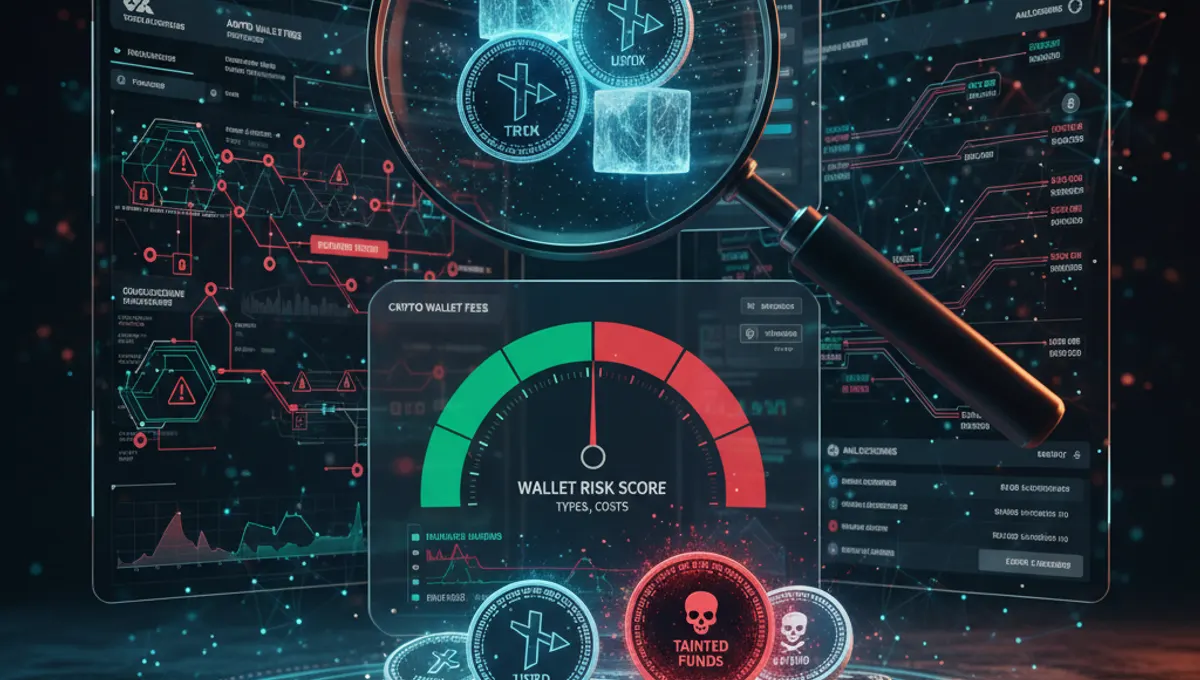
Once you've located a wallet address, screen it for AML compliance to determine its risk level. An AML risk score reflects the likelihood that a wallet holds tainted coins, has been flagged by exchanges, or is connected to illicit activity. To check the score, use a blockchain analytics platform or AML screening service. Enter the wallet address and review the risk assessment, which typically categorizes addresses as low, medium, or high risk. Low-risk wallets show clean transaction histories with no mixer exposure or darknet links. Medium-risk wallets may have received funds from mixers or less-regulated exchanges but lack direct illicit connections. High-risk wallets are linked to stolen funds, sanctions lists, darknet markets, or gambling platforms. The screening report should detail specific risk factors, such as exposure to known scams or sanctioned entities. For USDT on Tron (TRC20) or Bitcoin addresses, use services that specialize in those blockchains. Check the AML Services directory on this site to find verified screening tools that provide transparent, detailed risk reports before you commit to a transaction.
Crypto Wallet Fees and Their Role in Risk Assessment
Crypto wallet fees vary by platform and transaction type, and understanding them helps you evaluate wallet legitimacy. Fees typically include network transaction costs (gas fees on Ethereum, miner fees on Bitcoin, energy costs on Tron), exchange withdrawal fees, and AML screening fees if you use a compliance service. When searching for a lost wallet, note any unusual fee patterns in its transaction history—wallets that consistently pay abnormally high fees to mixers or unidentified addresses may indicate risk. Legitimate wallets show reasonable, market-rate fees. If you're using an AML check service, expect a small fee per wallet screened; some services offer limited free checks. The fee structure should be transparent and not hidden. When comparing services, balance cost against report quality and coverage. A wallet with no fees but incomplete risk data is less valuable than a paid service offering comprehensive sanctions screening and darknet exposure detection. Avoid services with unclear pricing or hidden charges, as these may indicate low-quality analysis.
What Is a Crypto Wallet Number and How It Relates to Screening?
A crypto wallet number is not a standard term, but it typically refers to the wallet's unique address identifier or account number on an exchange. When you search for a lost wallet, you may encounter wallet numbers in several contexts: exchange account numbers (used to link your identity to a wallet), wallet index numbers (in hierarchical deterministic wallets derived from a seed phrase), or transaction IDs (which identify specific transfers). For AML screening purposes, the relevant identifier is the wallet address itself—a long alphanumeric string specific to each blockchain. Some exchanges assign internal wallet numbers for customer reference, but these are not directly searchable on the blockchain. When conducting a lost wallet search, focus on recovering the actual blockchain address, not just an exchange account number. Once you have the address, use it to check the wallet's transaction history and AML risk score. If you're recovering a wallet from an exchange, request the blockchain address from customer support, as this is what you'll need for screening and verification.
Best Practices for Lost Wallet Search and Verification
Follow these steps to safely search for and verify a lost wallet. Start by organizing all available information: recovery phrases, private keys, exchange emails, transaction records, and device backups. Use multiple block explorers to cross-verify address details and transaction history. Never share private keys or seed phrases during a search; legitimate recovery does not require this information. When you locate a potential wallet, verify it by checking transaction amounts and dates against your personal records. Before moving funds or accepting deposits, always run an AML risk check through a verified service. Document the screening report for compliance purposes. If the wallet is flagged as high-risk, investigate the specific risk factors before deciding whether to use it. For wallets on Tron (TRC20 USDT) or Bitcoin, use blockchain-specific screening tools for accurate results. If you're unable to locate your wallet after thorough searching, consider it lost and do not attempt to access it through unofficial recovery services, which may be scams. Consult the curated list of verified AML services on this site to ensure your screening is conducted through trusted, transparent platforms.
Frequently asked questions
How do I find a lost crypto wallet address?
Check email, cloud storage, and password managers for backup files or seed phrases. Search your device for wallet exports. Contact the exchange where you created it for account records. Use block explorers like Etherscan or Tronscan with any known transaction ID or associated address. Review bank statements for crypto purchase references. Document all addresses found before screening them for AML compliance.
What does a crypto wallet risk score mean?
A risk score indicates the likelihood that a wallet holds tainted coins or is linked to illicit activity. Low-risk wallets show clean transaction histories. Medium-risk wallets may have mixer exposure. High-risk wallets are connected to stolen funds, sanctions lists, or darknet markets. Always check the risk score before sending or receiving funds to avoid compliance violations and frozen accounts.
Can I recover a lost wallet without a seed phrase?
Recovery without a seed phrase is difficult but possible in limited cases. If the wallet was created on an exchange, contact support with proof of identity to access your account and associated addresses. If it was a self-hosted wallet, recovery depends on whether you have backups or private keys. For lost personal wallets without backups, recovery is typically not possible. Never use unofficial recovery services, as these are often scams.
What should I do if my lost wallet is flagged as high-risk?
If a wallet screens as high-risk, investigate the specific risk factors in the AML report. Determine whether the risk is acceptable for your use case. If the wallet holds stolen funds or is sanctioned, do not use it. If the risk is due to mixer exposure or past associations, assess your compliance tolerance. Consult verified AML services on this site for detailed guidance before proceeding with any transaction.
Which block explorer should I use to search for a lost wallet?
Use blockchain-specific explorers: Blockchain.com or Mempool.space for Bitcoin, Etherscan for Ethereum, Tronscan for Tron. Enter the wallet address, transaction ID, or exchange name to locate your wallet. Cross-verify results across multiple explorers. For USDT on Tron (TRC20), use Tronscan. Document all findings and then screen the address through a verified AML service for compliance verification.