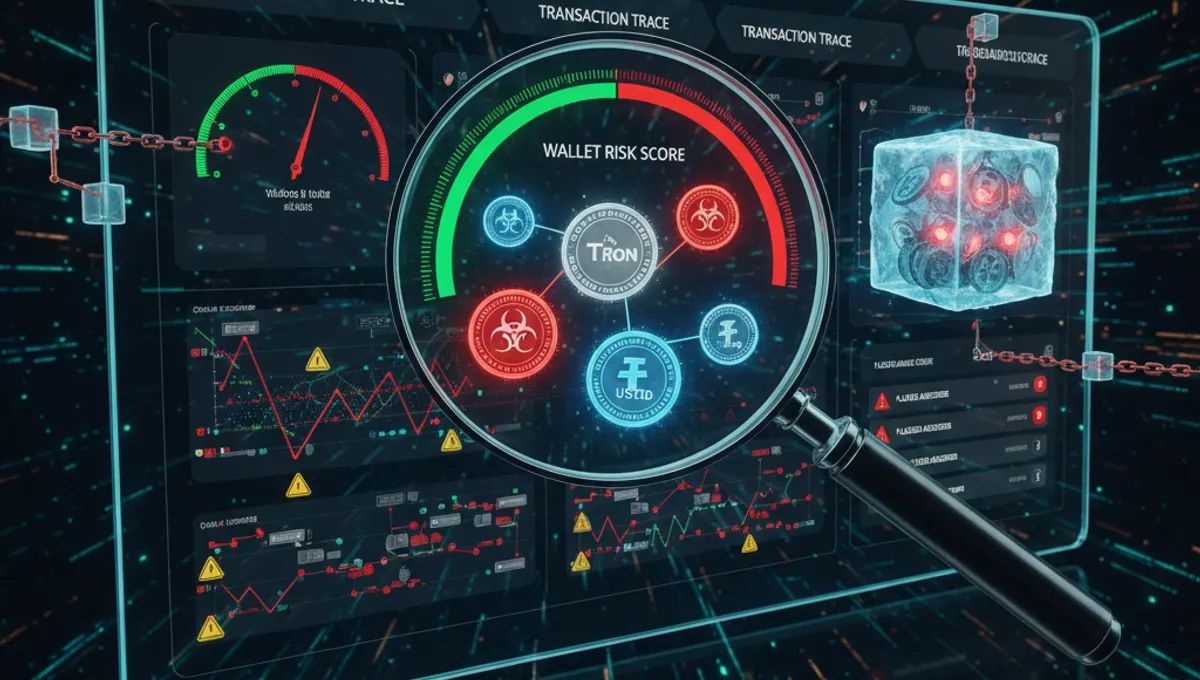
What Is a Crypto Transaction: Core Definition
A crypto transaction is a digitally signed record that moves cryptocurrency from a sender's wallet address to a recipient's address on a blockchain network. Each transaction contains a unique transaction ID (hash), timestamp, amount, sender address, recipient address, and transaction fees. Once broadcast and confirmed by network validators, the transaction becomes immutable and visible to anyone on the public ledger. Unlike traditional bank transfers, crypto transactions do not require a central authority to approve them—the network consensus mechanism (proof of work or proof of stake) validates ownership and prevents double-spending. Transaction finality varies by blockchain: Bitcoin confirmations take minutes, while Tron transactions settle in seconds. Every transaction is traceable, meaning the entire history of an address's activity can be reviewed by blockchain analytics tools used for AML compliance and risk assessment.
How Crypto Transaction Monitoring Works for AML Compliance
Crypto transaction monitoring is the continuous tracking of blockchain activity to detect illicit patterns and enforce regulatory compliance. AML (Anti-Money Laundering) systems scan transactions against sanctions lists, identify high-risk behaviors (rapid consolidation, mixing service usage, darknet market connections), and assign risk scores to addresses. Transaction monitoring rules typically flag: transfers to known mixer addresses, rapid movement through multiple wallets, large round-number transfers suggesting layering, and activity linked to stolen funds or scams. Financial institutions and exchanges use transaction monitoring to satisfy KYT (Know Your Transaction) requirements and prevent processing of tainted coins. Real-time monitoring systems alert compliance teams when a transaction matches risk criteria, enabling them to freeze accounts or request additional documentation. The monitoring process relies on blockchain analytics platforms that maintain databases of known high-risk addresses, darknet market wallets, and sanctioned entity holdings. For individuals, understanding transaction monitoring helps explain why exchanges sometimes reject deposits or why received funds may be flagged as dirty.
Crypto Transaction ID Tracking: How to Identify and Verify Transfers
A crypto transaction ID (also called a hash or TXID) is a unique alphanumeric string that identifies a specific transaction on the blockchain. You can use the transaction ID to track a transfer's status, confirm receipt, and verify the amount and addresses involved. To track a transaction: (1) obtain the transaction ID from your wallet or exchange confirmation, (2) visit a blockchain explorer (such as official project documentation or verified analytics platforms), (3) paste the transaction ID into the search bar, (4) review the transaction details including sender, recipient, amount, fees, and confirmation count. Transaction ID tracking is essential for dispute resolution, confirming that funds were sent correctly, and detecting if a transaction failed or was reversed. For AML purposes, transaction ID tracking allows compliance teams to trace the origin of received funds and identify if they passed through high-risk addresses. If you receive cryptocurrency and want to verify its legitimacy, tracking the transaction ID through a blockchain explorer is the first step before accepting the funds into your exchange account.
Understanding Crypto Transaction Fees and Their Role in Risk Assessment
Crypto transaction fees are payments to network validators for processing and confirming transactions on the blockchain. Fee amounts vary based on network congestion, transaction size (in bytes), and the sender's chosen priority level. Higher fees typically result in faster confirmation; lower fees may cause delays. Transaction fees are not refundable and are deducted from the total amount sent. For AML monitoring, transaction fees can indicate transaction intent: unusually high fees on small transfers may suggest urgency or illicit activity, while consistent low-fee patterns suggest routine activity. Mixers and money laundering services often pay high fees to prioritize confirmation speed and obscure transaction trails. When assessing wallet risk, compliance analysts examine fee patterns alongside transaction frequency and amounts. For users receiving funds, understanding transaction fees helps verify that the received amount matches the sent amount minus fees. Exchanges sometimes flag transactions with anomalous fee structures as part of their transaction monitoring rules. If you are sending cryptocurrency, choosing appropriate fees balances cost efficiency with confirmation speed and helps avoid triggering AML alerts.
Crypto Transaction Monitoring Jobs and Compliance Careers
Crypto transaction monitoring jobs involve analyzing blockchain activity, investigating suspicious transactions, and ensuring compliance with AML and KYC regulations. Roles include transaction monitoring analysts, blockchain compliance specialists, and AML investigators who review flagged transactions, trace fund origins, and prepare compliance reports. These professionals use blockchain analytics tools to identify patterns, assess risk scores, and determine if transactions warrant further investigation or account freezing. Compliance teams work for exchanges, custodians, and financial institutions to prevent money laundering, terrorist financing, and sanctions violations. The role requires understanding blockchain technology, regulatory frameworks (such as FinCEN guidance), and transaction monitoring rules specific to each jurisdiction. Analysts must document findings, maintain audit trails, and communicate with legal and compliance leadership. As crypto adoption grows, demand for skilled transaction monitoring professionals continues to increase. For individuals interested in this field, certifications in AML/KYC compliance and blockchain analytics are valuable. Understanding how transaction monitoring works—as explained in this guide—provides foundational knowledge for anyone considering a career in crypto compliance.
How to Check a Wallet Before Receiving Cryptocurrency
Before accepting cryptocurrency, verify the sender's wallet address and assess the transaction's risk profile. Follow these steps: (1) Ask the sender for their wallet address and confirm it matches the transaction details, (2) Use a blockchain explorer to review the sender's recent transaction history—look for patterns suggesting legitimate activity, (3) Check the transaction ID to confirm the transfer is pending or confirmed, (4) Use an AML screening service to obtain a risk score for the sender's address—scores typically range from low (green) to high (red) based on exposure to mixers, darknet markets, stolen funds, or sanctions lists, (5) Review the risk assessment report for specific flags: if the address is linked to a known scam, mixer, or darknet market, decline the transfer or escalate to your compliance team. Acceptable risk thresholds depend on your organization's policy, but generally: low-risk scores (0-20%) are safe to accept, medium-risk scores (20-50%) warrant investigation, and high-risk scores (50%+) should be rejected or frozen pending further review. For USDT (TRC20) and Tron addresses, the same process applies—use a Tron-compatible blockchain explorer and AML tool. Our curated list of verified AML services on this site includes tools specifically designed for pre-transaction screening; checking wallets through trusted services listed there is the safest starting point before accepting funds.
What Happens When Tainted Coins Are Detected
When a transaction monitoring system detects tainted coins (cryptocurrency linked to theft, scams, sanctions, or darknet activity), the receiving exchange or custodian typically freezes the account and initiates a compliance review. Tainted coins are flagged based on their transaction history—if an address received funds from a known mixer, darknet market, or stolen wallet, downstream recipients inherit the risk. Consequences of receiving tainted coins include: account suspension, mandatory KYC re-verification, fund freezing pending investigation, and potential account closure. Exchanges report suspicious activity to financial regulators (such as FinCEN in the US), and in severe cases, law enforcement may investigate the recipient. If you receive tainted coins unknowingly, contact your exchange's compliance team immediately, provide documentation of the transfer, and cooperate with their investigation. You may recover access to your account if you can demonstrate you were an unwitting recipient and had no knowledge of the funds' illicit origin. To avoid this situation, always screen incoming transactions using AML tools before accepting funds. Understanding crypto transaction meaning and monitoring practices helps you recognize high-risk transfers and protect your account from frozen funds and exchange bans.
Frequently asked questions
What is a crypto transaction ID and how do I find it?
A crypto transaction ID (TXID or hash) is a unique identifier for a blockchain transaction. Find it in your wallet or exchange confirmation email, then search it on a blockchain explorer to verify the transfer status, sender, recipient, amount, and fees. The TXID proves the transaction occurred and allows you to track its confirmation progress.
Why do exchanges monitor crypto transactions?
Exchanges monitor transactions to comply with AML and KYC regulations, detect money laundering, prevent sanctions violations, and identify stolen or tainted funds. Transaction monitoring helps exchanges avoid processing illicit activity, which could result in regulatory fines, account freezes, or legal action. Monitoring protects both the exchange and its users.
How are crypto transaction fees calculated?
Transaction fees depend on network congestion, transaction size (in bytes), and the priority level you select. Higher fees result in faster confirmation; lower fees cause delays. Fees are paid to network validators and are not refundable. Fee structures vary by blockchain—Bitcoin, Tron, and Ethereum each have different fee models.
What does a high-risk transaction score mean?
A high-risk transaction score indicates the address or transaction has exposure to illicit activity such as mixers, darknet markets, stolen funds, or sanctions violations. High-risk scores (typically 50%+) may trigger account freezes, mandatory investigation, or rejection by exchanges. Always screen incoming transactions before accepting funds to avoid receiving tainted coins.
Can I reverse a crypto transaction if I sent it to the wrong address?
No, crypto transactions are irreversible once confirmed on the blockchain. If you send funds to an incorrect address, you cannot recover them unless the recipient voluntarily returns them. Always verify the recipient address carefully before confirming a transaction. Use blockchain explorers to double-check transaction details before finalizing transfers.