What Is Blockchain Transaction Monitoring?
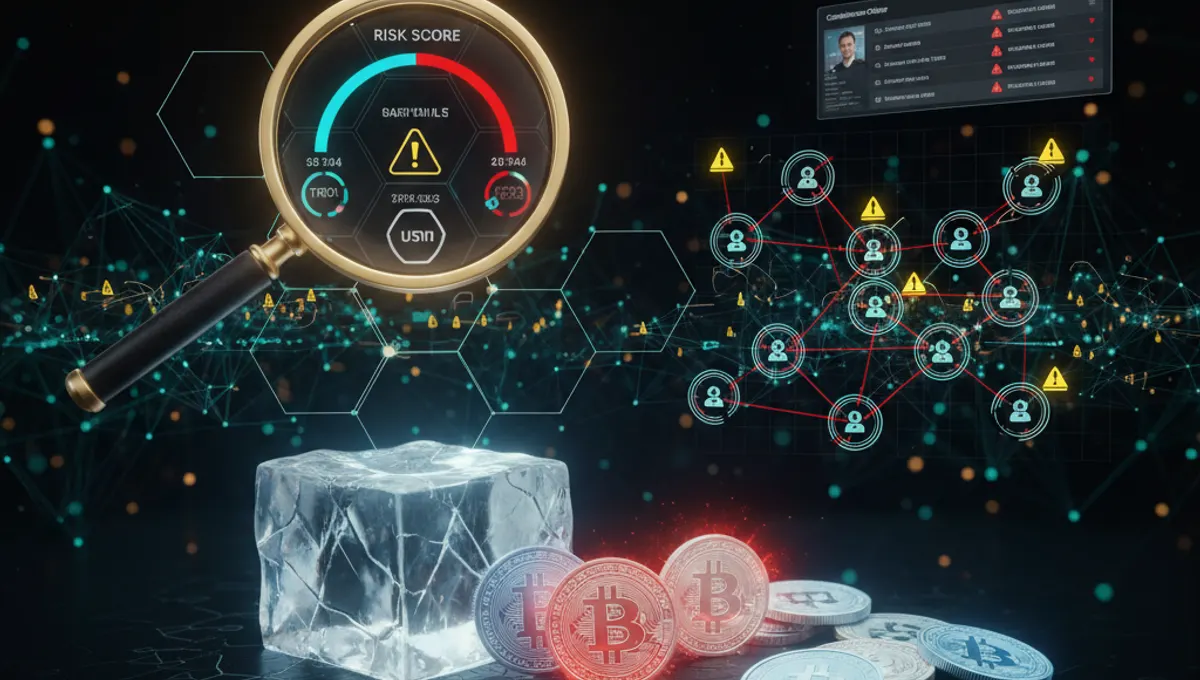
Blockchain transaction monitoring is the automated tracking and analysis of on-chain transfers to detect compliance risks. Unlike traditional banking, where transactions are private until flagged, blockchain transactions are public and immutable—but their risk status is not obvious. Monitoring systems use transaction monitoring cryptocurrency rules to classify transfers by source and history. They check wallet addresses against sanctions lists (OFAC, EU), identify mixer usage, trace coins back to darknet markets or theft events, and assign a risk score. The goal is to prevent money laundering, terrorist financing, and sanctions evasion. Crypto transaction monitoring happens in real time or near-real time, allowing compliance teams and individual users to reject high-risk incoming transfers before accepting them. This is especially critical for USDT (TRC20 and other chains), Bitcoin, and Tron addresses, where large sums move daily and frozen funds can lock up capital indefinitely.
How Does AML Transaction Monitoring Work?
AML transaction monitoring rules operate through several layers. First, the system indexes every transaction on the blockchain, recording sender, receiver, amount, and timestamp. Second, it applies heuristic analysis: clustering addresses that likely belong to the same entity, detecting mixer usage (tumbling services that obscure coin origin), and identifying behavioral patterns common to theft or scams. Third, it cross-references the transaction against external data: sanctions lists, known darknet market addresses, stolen-fund databases, and gambling platform blacklists. Fourth, it assigns a risk score, typically on a scale from 0 (clean) to 100 (high risk). A score above 50 usually signals significant concern—mixer involvement, darknet links, or recent theft. Finally, the system flags the transaction for human review or automatic rejection if risk exceeds a threshold. This process happens in milliseconds. For USDT TRC20 and Bitcoin addresses, monitoring is continuous; a single wallet may be checked hundreds of times as it receives and sends funds.
What Risk Score Levels Mean for Your Wallet
Risk scores quantify the likelihood that a wallet or transaction is involved in illicit activity. A score of 0–20 indicates minimal risk: the address has clean history, no mixer involvement, and no known theft or sanctions links. Scores of 21–50 suggest moderate caution: the wallet may have received funds from a mixer, have indirect darknet exposure, or show unusual transaction patterns. Scores above 50 are red flags: direct mixer usage, confirmed theft history, sanctions list matches, or repeated transactions with known scam addresses. Exchanges typically freeze accounts or reject deposits if incoming USDT or Bitcoin carries a score above 70. Some platforms are stricter and reject anything above 50. Understanding your wallet's risk score before sending or receiving crypto is essential. If you receive a transfer flagged as high-risk, you face three outcomes: the exchange rejects the deposit, your account is frozen pending review, or the coins are permanently locked. Checking a wallet's risk score before accepting a transfer is the only way to avoid these scenarios.
How to Check a Wallet Before Receiving USDT or Bitcoin
Before accepting a large transfer, verify the sender's wallet address using a blockchain transaction tracker free tool or a paid AML screening service. Here is the step-by-step process:
1. Obtain the sender's wallet address (Tron, Bitcoin, Ethereum, or other chain).
2. Visit a verified AML screening service—our curated AML Services list includes trusted platforms that offer free and paid checks.
3. Paste the address into the screening tool and run the scan.
4. Review the risk score: 0–20 is safe, 21–50 warrants caution, above 50 is high-risk.
5. Check the risk breakdown: does it flag mixer usage, darknet links, theft, or sanctions?
6. If the score is acceptable (typically below 50), proceed with the transfer.
7. If the score is high, ask the sender for an alternative address or decline the transfer.
For USDT TRC20 and Bitcoin addresses, this check takes seconds and can save you from frozen funds. Many exchanges now require senders to provide a clean wallet history; proactive screening puts you ahead. Free blockchain transaction tracker tools offer basic checks; paid services provide deeper analysis, historical data, and detailed risk reports. Starting with our verified AML Services page is the safest approach—all listed services have been vetted for accuracy and compliance.
Common Risk Flags in Cryptocurrency Transaction Monitoring
Certain patterns trigger high-risk flags during crypto transaction monitoring. Mixer involvement is the most common: if a wallet has sent funds to a known tumbling service, the transaction is flagged as intentionally obscured. Darknet exposure means the wallet has received or sent to addresses linked to illegal marketplaces; this is an automatic red flag. Theft history indicates the coins were stolen in a known hack or scam; exchanges will freeze these coins indefinitely. Sanctions matches occur when a wallet address or associated entity appears on OFAC or EU sanctions lists; receiving these coins violates law in many jurisdictions. Gambling platform links flag wallets that have interacted with unregulated or high-risk gambling services. Rapid movement patterns—coins moving through many addresses in hours—suggest layering, a money-laundering technique. Scam associations mean the wallet has received funds from known Ponzi schemes, rug pulls, or phishing attacks. Any of these flags can result in account freezes or deposit rejection. Understanding what triggers a flag helps you avoid receiving tainted coins in the first place.
What Happens When Your Wallet Is Flagged as High-Risk?
If your wallet receives a high-risk flag during blockchain transaction monitoring, several outcomes are possible. The exchange may reject the deposit outright, returning the funds to the sender after a delay. More commonly, the exchange freezes your account pending manual review; this can last days or weeks. During the freeze, you cannot withdraw, trade, or deposit. If the coins are confirmed as stolen or sanctioned, they are permanently locked, and your account may be closed. If the coins are linked to a mixer but not confirmed illegal, the exchange may allow the deposit but flag your account for enhanced monitoring. In some cases, you must provide proof of the coin's origin (a receipt, invoice, or statement from the sender) to unlock the funds. To avoid this, screen incoming wallets before accepting transfers. If you receive flagged coins, contact the exchange's compliance team immediately with documentation of the transfer's legitimacy. Proactive screening is far easier than fighting a frozen account.
Comparing Free and Paid Blockchain Transaction Monitoring Tools
Free blockchain transaction tracker tools offer basic risk scoring and limited historical data; they are useful for quick checks but lack depth. Paid AML screening services provide comprehensive analysis, including detailed risk breakdowns, historical transaction chains, entity clustering, and compliance reports suitable for business use. Free tools typically check a wallet against public sanctions lists and known theft databases but may miss mixer detection or subtle risk patterns. Paid services use proprietary algorithms, real-time data feeds, and expert analysis to catch complex laundering schemes. For individual users checking a single incoming transfer, a free tool is often sufficient. For businesses, exchanges, or high-value transfers, paid services are essential. Our AML Services page curates verified platforms offering both free and paid options; starting there ensures you use accurate, compliant tools rather than unreliable third-party sites. Many services offer free trials or limited free checks, allowing you to test before committing to a paid plan. Regardless of which tool you choose, always verify the service's reputation and ensure it covers the blockchain you need (Tron, Bitcoin, Ethereum, etc.).
Frequently asked questions
Can I check a Tron or Bitcoin address for free before receiving crypto?
Yes. Free blockchain transaction tracker tools and basic AML screening services allow you to check a wallet address at no cost. Enter the address, and the tool returns a risk score and basic flags. Paid services offer deeper analysis. Our AML Services page lists verified free and paid options for all major blockchains.
What does a high risk score mean for USDT or Bitcoin?
A high risk score (above 50–70, depending on the exchange) indicates the wallet has mixer involvement, darknet links, theft history, or sanctions exposure. Exchanges typically reject deposits or freeze accounts if the score is too high. Receiving high-risk coins can result in permanent account closure or locked funds.
How does blockchain transaction monitoring detect stolen or tainted coins?
Monitoring systems cross-reference wallet addresses against theft databases, sanctions lists, and known darknet markets. If a coin's history traces back to a confirmed theft or illegal source, it is flagged as tainted. The system also detects mixer usage, which obscures origin and triggers a risk flag.
What should I do if I receive a flagged transfer?
Contact the sender and ask for an alternative address, or decline the transfer. If you have already received it, contact your exchange's compliance team with proof of legitimacy. Do not attempt to move or trade the coins; this may worsen the freeze. Proactive screening before accepting transfers is the best prevention.
Is cryptocurrency transaction monitoring the same as KYC?
No. KYC (Know Your Customer) verifies user identity. Transaction monitoring tracks on-chain activity and risk. Both are part of AML compliance, but they serve different purposes. Monitoring detects illicit transfers; KYC prevents bad actors from opening accounts in the first place.