What Is a Crypto Wallet Example and Why It Matters
A crypto wallet is a digital container for blockchain assets, identified by a public address. Bitcoin wallets typically display addresses like 1A1z7agoat7SFkd5Ko4v6YwMVrZSdeUjd9; Tron wallets use addresses starting with T, such as TQCz8aSwFG6smtulZnKBkyS9pPm8gVTO2U; and USDT on Tron (TRC20) uses the same Tron address format. Each wallet type has different fee structures and risk profiles. Understanding wallet examples helps you recognize legitimate addresses and identify suspicious ones. Before accepting funds into any wallet, screening the sender's address for AML risk is critical—wallets tied to mixers, darknet markets, scams, or sanctioned entities can result in frozen funds or exchange account bans. Crypto wallet ranking systems and AML screening services evaluate these risks by analyzing transaction history and blockchain patterns.
How Crypto Wallet Screening and AML Risk Scoring Work
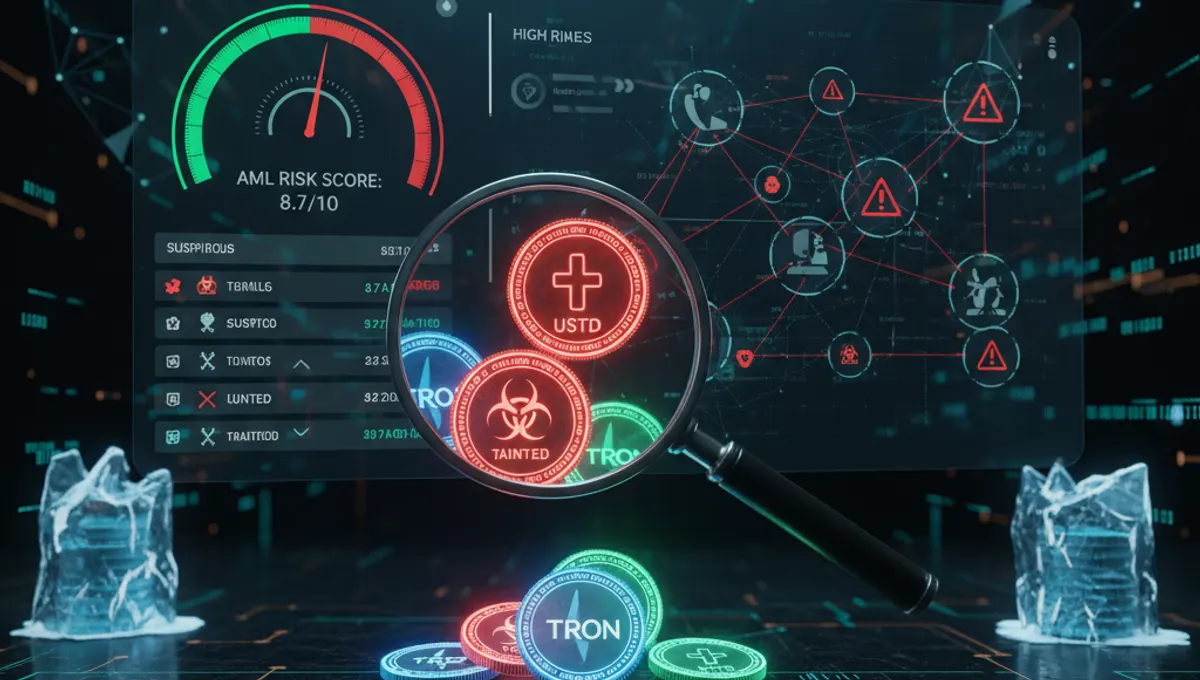
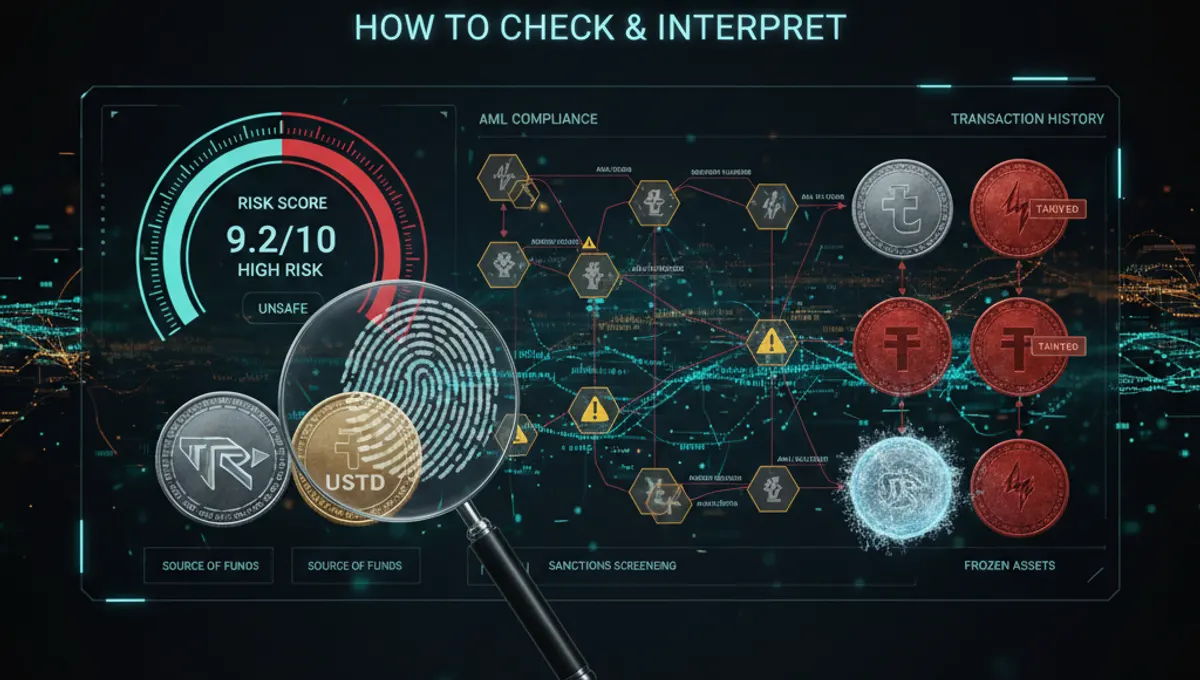
AML (Anti-Money Laundering) screening assigns a risk score to a wallet based on its transaction history and associations. A risk score typically ranges from low (0–20) to medium (21–60) to high (61–100), though thresholds vary by exchange and compliance framework. Screening checks whether a wallet has received funds from known mixers, darknet markets, stolen-fund sources, or sanctioned entities. For example, a Bitcoin address that received coins from a ransomware payment or a Tron address linked to a Ponzi scheme will flag as high-risk. Crypto wallet fees and transaction patterns are also analyzed—unusual activity spikes or rapid fund movement can indicate money laundering. KYT (Know Your Transaction) tools scan the blockchain in real time, while KYC (Know Your Customer) processes verify the wallet owner's identity. Most exchanges use both to prevent compliance violations and frozen USDT or account suspensions.
Step-by-Step: How to Check a Crypto Wallet Before Receiving Funds
Follow these steps to screen a wallet address before accepting a transfer:
1. Obtain the full wallet address from the sender (e.g., a Tron address or Bitcoin address).
2. Visit a trusted AML screening service from our verified AML Services list on this site.
3. Paste the wallet address into the screening tool.
4. Review the risk score and transaction history report.
5. Check for red flags: mixer exposure, darknet links, stolen funds, or sanctions matches.
6. Decide whether to accept the transfer based on the risk level.
7. If high-risk, request an alternative address or decline the transfer.
For USDT TRC20 transfers, use a Tron-compatible screening tool. For Bitcoin, ensure the tool supports legacy and segwit addresses. Crypto wallet number (the count of transactions) and age also matter—older wallets with steady, legitimate activity are typically lower-risk than brand-new addresses with sudden large transfers.
Understanding Crypto Wallet Risk Score Levels
Risk scores help you decide whether to accept funds. Here's how to interpret them:
**Low Risk (0–20):** Wallet has clean transaction history, no mixer or darknet exposure, and no sanctions matches. Safe to receive funds.
**Medium Risk (21–60):** Wallet may have minor red flags—e.g., received small amounts from a mixer or has limited transaction history. Exercise caution; verify the sender's identity if possible.
**High Risk (61–100):** Wallet is linked to stolen funds, ransomware, darknet markets, gambling platforms, or sanctioned entities. Reject the transfer to avoid frozen USDT, account bans, or compliance violations.
Exchanges often set their own thresholds; some accept only low-risk wallets, while others tolerate medium-risk with additional verification. Crypto wallet screening before deposit is your first line of defense against receiving tainted coins.
Common Crypto Wallet Examples and Their Risk Profiles
Different wallet types carry different risks:
**Bitcoin Addresses:** Legacy addresses (1...) and segwit addresses (bc1...) are widely used but can be associated with mixers and darknet markets. Screen all Bitcoin addresses before accepting large transfers.
**Tron (TRX) Addresses:** Tron addresses (T...) are common for USDT TRC20 transfers due to lower fees. Many are legitimate, but some are linked to scams or gambling sites. Always verify.
**USDT TRC20 Wallets:** These are Tron addresses holding USDT stablecoin. They're popular for remittances and commerce but can be flagged if they've interacted with high-risk protocols.
**Exchange Deposit Addresses:** Addresses provided by exchanges (Binance, Kraken, etc.) are typically low-risk, as exchanges perform their own AML checks.
**Self-Custody Wallets:** Private wallets (MetaMask, Ledger, etc.) vary widely in risk; screening is essential before accepting funds.
What to Do If Your Wallet Is Flagged as Tainted or High-Risk
If your wallet receives a high-risk score or is flagged for tainted coins:
1. **Do not panic.** A flag doesn't mean you committed a crime; it may indicate the sender's wallet was compromised or the funds passed through a mixer.
2. **Request documentation** from the sender explaining the source of funds.
3. **Contact your exchange** if you're depositing flagged funds. Provide proof of the legitimate source (invoice, employment contract, etc.).
4. **Avoid moving the funds** to another wallet immediately—this can increase suspicion of money laundering.
5. **Consider using a compliance service** to generate a report proving the funds' legitimacy.
6. **If funds are frozen,** work with your exchange's compliance team to resolve the issue; provide transaction records and identity verification.
In some cases, exchanges will unfreeze funds after review. In others, the funds may remain locked. Crypto wallet ranking and screening before receipt prevents this scenario entirely.
Comparing AML Screening Services and Choosing the Right Tool
Multiple AML screening services exist, each with different coverage, fees, and accuracy. When choosing a tool:
**Coverage:** Ensure it supports the blockchain you need (Bitcoin, Tron, Ethereum, etc.) and the wallet type (exchange addresses, self-custody, etc.).
**Accuracy:** Look for services that update their risk databases regularly and use multiple data sources (blockchain analytics, sanctions lists, darknet monitoring).
**Crypto wallet fees:** Some services charge per scan; others offer monthly subscriptions. Compare total cost for your volume.
**Speed:** Real-time screening is essential for high-frequency traders; batch processing works for occasional users.
**Compliance credibility:** Choose services that comply with OFAC, FinCEN, and local regulations.
Our curated list of verified AML Services on this site includes trusted providers that meet these criteria. Start there to find a service that fits your needs and risk tolerance. Screening through a reputable tool is the safest way to avoid frozen USDT, account bans, and compliance headaches.
Frequently asked questions
What is a crypto wallet example?
A crypto wallet example is any blockchain address holding digital assets. Bitcoin examples include addresses starting with 1, 3, or bc1. Tron wallets start with T. USDT TRC20 uses Tron addresses. Each wallet is identified by a public address and secured by a private key. Screening wallets for AML risk before receiving funds is essential to avoid tainted coins and frozen accounts.
How do I check if a crypto wallet is safe?
Use an AML screening service to check the wallet's risk score and transaction history. Look for red flags: mixer exposure, darknet links, stolen funds, or sanctions matches. Risk scores range from low (0–20) to high (61–100). Low-risk wallets are safe; high-risk wallets should be rejected. Our verified AML Services list provides trusted screening tools.
What does a high crypto wallet risk score mean?
A high risk score (61–100) indicates the wallet is linked to stolen funds, ransomware, darknet markets, gambling, or sanctioned entities. Accepting funds from a high-risk wallet can result in frozen USDT, account bans, or compliance violations. Always reject high-risk transfers or verify the sender's identity and source of funds before proceeding.
Can I receive USDT TRC20 from a flagged wallet?
Receiving USDT TRC20 from a flagged wallet risks your exchange account being frozen or banned. If you do receive flagged funds, contact your exchange's compliance team immediately with proof of the legitimate source. Provide documentation like invoices or employment contracts. Some exchanges may unfreeze funds after review; others may keep them locked.
What crypto wallet fees should I expect?
Blockchain transaction fees vary by network and congestion. Bitcoin fees are typically higher than Tron fees. AML screening service fees depend on the provider—some charge per scan, others offer monthly subscriptions. Compare pricing on our AML Services page to find a cost-effective screening tool for your needs.