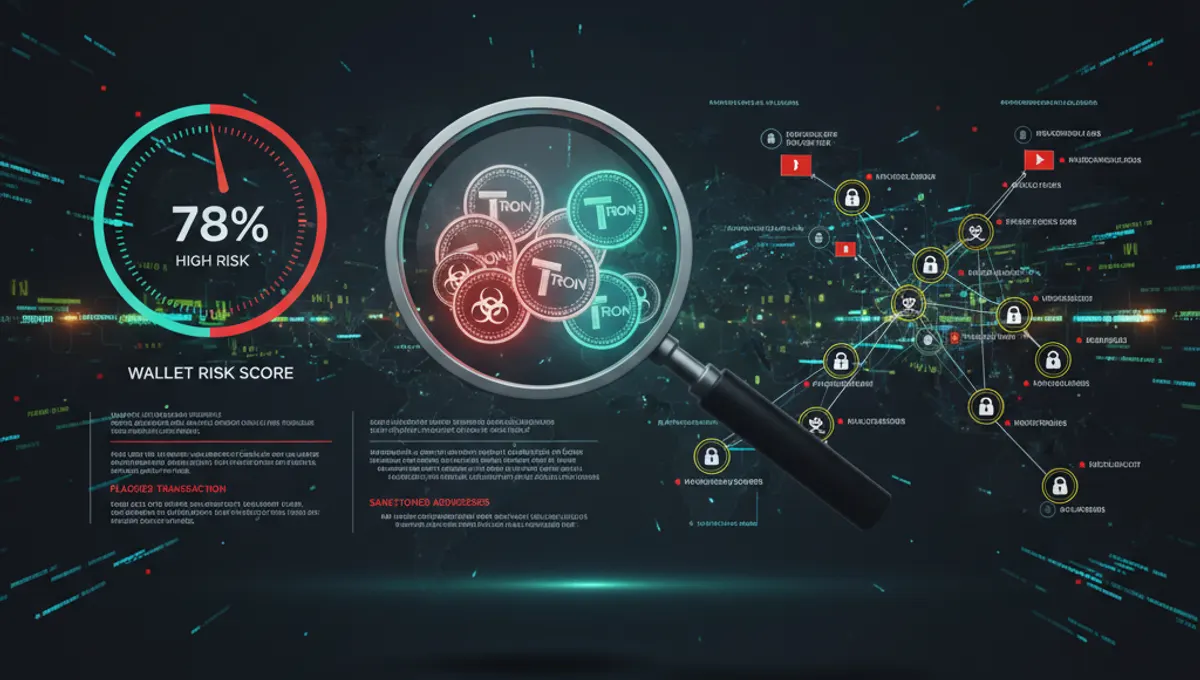
What Is a Crypto Wallet AML Risk Score?
An AML risk score is a numerical rating assigned to a blockchain address based on its transaction history and associations. Scores typically range from 0 (clean) to 100 (high risk), though systems vary. The score reflects whether the wallet has received funds from known risk sources: cryptocurrency mixers, darknet marketplaces, theft-related addresses, gambling platforms, or entities on sanctions lists.
Wallet screening services analyze the entire chain of transactions leading to an address. If a wallet received even a small amount from a flagged source, that taint can propagate forward. For example, a wallet that mixed coins or received stolen Bitcoin will carry a higher score than one with only peer-to-peer transfers. Exchanges use these scores to decide whether to accept deposits, require additional verification, or block the account entirely. A wallet ranking system orders addresses by their risk level, making it easy to identify which ones pose compliance problems.
How Does Wallet Screening and Risk Ranking Work?
Wallet screening works by tracing transaction flows on the blockchain and cross-referencing addresses against known risk databases. The process follows these steps:
1. Transaction history analysis: The service pulls all incoming and outgoing transactions for a wallet.
2. Source identification: Each transaction source is checked against lists of known high-risk addresses (mixers, darknet markets, scams, stolen funds).
3. Risk categorization: Transactions are tagged with risk types—mixer exposure, darknet activity, sanctions, gambling, or theft.
4. Score calculation: The system weights each risk factor and produces a final score.
5. Ranking: Wallets are ranked from lowest to highest risk based on their scores.
Services like those listed on our AML Services page use blockchain analytics to maintain these databases. The ranking reflects not just direct exposure but also indirect taint—if a wallet received funds from an address that itself received mixer coins, that secondary connection may still increase the score. This is why a wallet can appear risky even if the owner didn't intentionally mix coins.
What Do Different Risk Score Levels Mean?
Risk score thresholds vary by service and exchange policy, but general ranges are:
Low risk (0–20): Clean transaction history, no known associations with high-risk sources. Exchanges typically accept these wallets without additional scrutiny.
Medium risk (21–50): Some exposure to minor risk factors—perhaps a transaction from a gambling platform or a small mixer interaction. Exchanges may require additional verification or flag the account for review.
High risk (51–100): Significant exposure to mixers, darknet markets, stolen funds, or sanctioned entities. Exchanges often freeze deposits or close accounts.
Acceptable thresholds depend on your jurisdiction and the exchange. Some platforms accept anything under 30; others are stricter at 10. Before receiving a large transfer, ask the sender for their wallet's risk score or run a screening yourself. If you receive coins flagged as tainted, the exchange may freeze your account even if you didn't know the source was problematic. This is why ranking and pre-screening matter.
How to Check and Rank Your Wallet Before Receiving Funds
To rank your own wallet or screen an incoming address before accepting a transfer:
1. Collect the wallet address: Copy the full address (TRX, USDT TRC20, Bitcoin, or Ethereum).
2. Visit a screening service: Use one of the verified AML services listed on our AML Services page—they offer free or low-cost checks.
3. Enter the address: Paste it into the screening tool.
4. Review the risk score: Check the numerical score and any flagged risk categories (mixer, darknet, sanctions, theft, gambling).
5. Examine the transaction history: Look at which sources contributed to the score.
6. Decide whether to accept: If the score is within your acceptable threshold, proceed. If not, ask the sender to use a different wallet or decline the transfer.
For USDT TRC20 and Tron addresses, the same process applies—enter the address and the service will rank it by risk. Bitcoin and Ethereum addresses can be screened the same way. Doing this before receiving funds prevents frozen accounts and compliance headaches later.
What Happens If Your Wallet Is Ranked as High Risk?
If your wallet receives a high-risk ranking, several outcomes are possible:
Exchange deposit rejection: When you try to deposit the coins, the exchange's automated screening flags the address and blocks the transaction.
Account freeze: If coins already entered your exchange account, the platform may freeze it pending investigation.
Funds held in escrow: Some exchanges hold high-risk deposits for 30–90 days while they investigate the source.
Account closure: In severe cases (sanctions exposure, darknet association), exchanges close accounts permanently.
To recover or mitigate:
- Contact the exchange's compliance team with documentation showing the source of your funds.
- Request a manual review if you believe the ranking is incorrect.
- Use a wallet with a lower risk score for future transfers.
- If the coins are genuinely tainted (stolen, from a scam), they may be permanently unusable on regulated exchanges.
This is why wallet ranking and screening before receiving funds is critical—it prevents these problems from occurring in the first place.
Comparing Wallet Screening Services for Ranking
When choosing a service to rank your wallet, consider:
Coverage: Does it screen Tron, USDT TRC20, Bitcoin, Ethereum, and other blockchains you use?
Database scope: Does it include sanctions lists, darknet markets, mixer databases, and theft registries?
Score transparency: Does it explain which risk factors contributed to the score, or is it a black box?
Speed: Can you get results instantly or do you wait hours?
Cost: Free checks, pay-per-scan, or subscription models?
Accuracy: Do exchanges trust the service's rankings?
Our curated list of verified AML services on the AML Services page includes options that meet these criteria. Start there to find a service that matches your needs. Many offer free initial checks, so you can test the interface before committing. For regular screening (e.g., if you receive many transfers), a subscription service may be more cost-effective than paying per check.
Best Practices to Avoid High-Risk Wallet Rankings
To keep your wallet ranking low and avoid compliance issues:
1. Receive from known, trusted sources only. Peer-to-peer transfers from friends or established businesses are lower risk than unknown senders.
2. Avoid mixers and tumblers. Never intentionally mix coins—it flags your wallet permanently.
3. Don't receive from gambling sites, darknet markets, or other high-risk platforms.
4. Screen before accepting large transfers. Ask the sender for their wallet's risk score or run a check yourself.
5. Use separate wallets for different purposes. Keep a clean wallet for exchange deposits and a separate one for other activities.
6. Monitor your wallet's history. Periodically run a screening to catch unexpected risk factors.
7. Keep records. If you receive flagged coins, document the source and context for compliance inquiries.
Wallet ranking is not permanent—a clean wallet will maintain a low score as long as it only receives funds from low-risk sources. However, once a wallet receives tainted coins, that history remains on the blockchain forever.
Frequently asked questions
What is a good crypto wallet AML risk score?
A score of 0–20 is generally considered good and acceptable to most exchanges. Scores between 21–50 may trigger additional verification. Above 50 is high risk and often results in deposit rejection or account freeze. Acceptable thresholds vary by exchange and jurisdiction, so check your platform's policy.
Can I improve my wallet's risk score?
No. A wallet's transaction history is permanent on the blockchain and cannot be altered. However, you can create a new wallet and transfer clean coins to it. Going forward, keep the new wallet free of high-risk sources to maintain a low score.
How long does a wallet stay flagged as high risk?
Indefinitely. The blockchain is immutable, so a wallet's history—including any mixer or darknet exposure—remains visible forever. Screening services update their databases as new risk information emerges, but past transactions cannot be erased.
Do all exchanges use the same wallet ranking system?
No. Each exchange may use different screening services or set different risk thresholds. A wallet accepted by one exchange might be rejected by another. Always check your specific exchange's compliance requirements before depositing.
What crypto wallet fees apply to screening services?
Many screening services offer free checks with limited results. Detailed reports or subscription plans typically cost between a few dollars and monthly fees. Our AML Services page lists verified options with transparent pricing so you can compare.