What Does a Crypto Wallet Lookup Include?
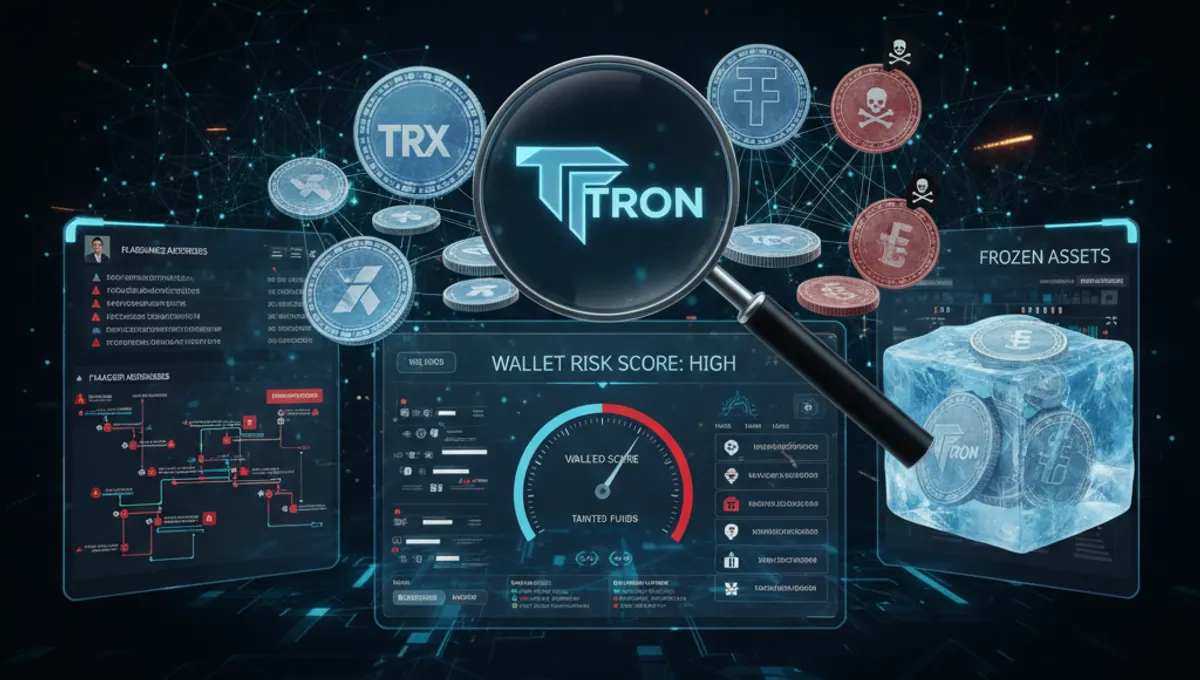
A crypto wallet lookup retrieves public blockchain data tied to a specific address. For USDT on Tron (TRC20), Bitcoin, or Ethereum, this includes transaction history, current balance, and connected addresses. Basic lookups use free blockchain explorers like Tronscan or Etherscan, which show on-chain activity but lack risk context. Advanced AML screening adds layers: it cross-references addresses against sanctions lists, identifies funds from stolen sources or scams, detects mixer usage, and assigns a risk score. A crypto wallet explained in compliance terms includes not just what the wallet holds, but where those coins came from and whether they pose regulatory or financial risk to the receiver.
How to Check a Wallet Address Step by Step
1. Identify the wallet address and blockchain. Copy the full address (e.g., a Tron address starting with T, or a Bitcoin address starting with 1, 3, or bc1).
2. Use a blockchain explorer for basic data. Paste the address into Tronscan (for Tron/USDT TRC20), Etherscan (Ethereum), or Blockchain.com (Bitcoin). You'll see transaction history and balance.
3. Check for red flags manually. Look for frequent transactions to known mixer addresses, rapid fund movements, or connections to flagged entities.
4. Run an AML check for comprehensive screening. Use a dedicated AML service to get a risk score, tainted funds detection, and sanctions screening in seconds.
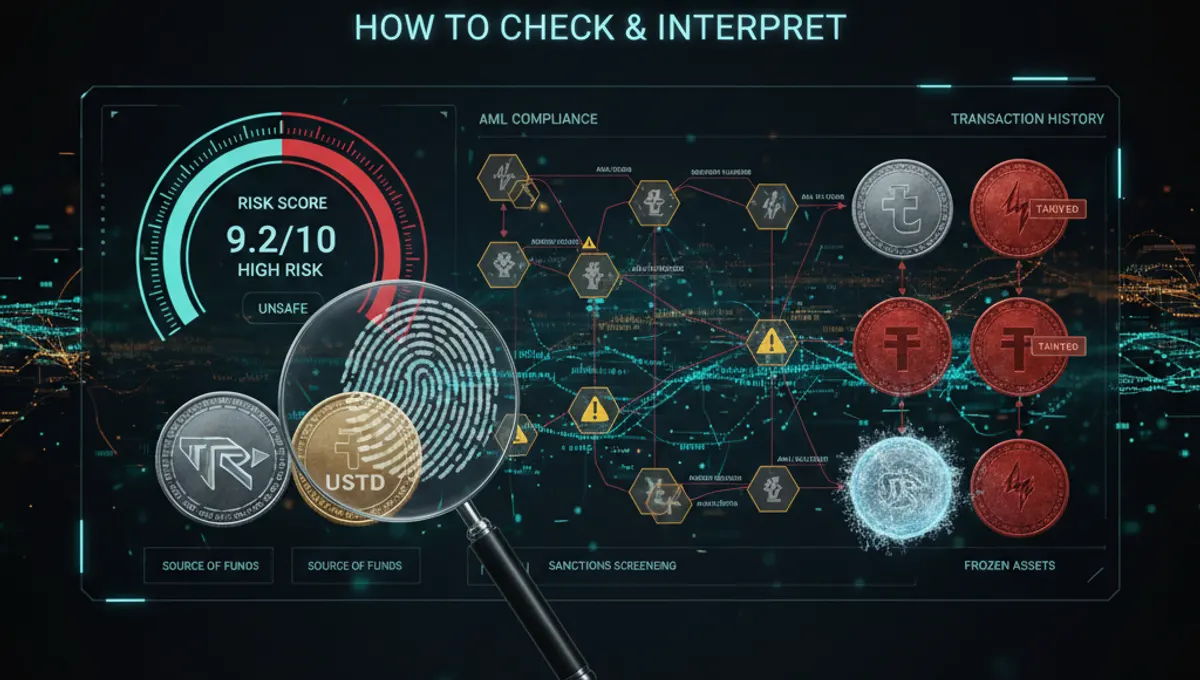
5. Review the risk score. Scores typically range from low (green) to high (red). Understand what the score means before accepting the transfer.
6. Document the result. Keep records of your wallet lookup for compliance and audit purposes.
Understanding Crypto Wallet Risk Scores
A risk score quantifies the likelihood that a wallet or transaction poses compliance or financial risk. Scores typically range from 0–100 or use color coding (green, yellow, red). Low scores (0–20) indicate clean wallets with no known exposure to theft, sanctions, or darknet activity. Medium scores (21–60) suggest some exposure—perhaps a few transactions with mixers or minor connections to flagged entities, but not necessarily disqualifying. High scores (61–100) flag serious concerns: direct darknet links, stolen funds, sanctioned entity involvement, or heavy mixer usage. When receiving USDT or TRX, most exchanges and compliance teams accept scores below 30–40. Scores above 60 often trigger account reviews or transaction blocks. A crypto wallet ranking by risk helps you decide whether to proceed with a transfer or request alternative payment.
What Are Crypto Wallet Fees and How Do They Relate to Screening?
Crypto wallet fees refer to transaction costs charged by networks or exchanges, not screening fees. Network fees (gas on Ethereum, energy on Tron) vary by congestion and are unavoidable. Exchange fees apply when depositing or withdrawing. AML screening fees are separate: some services offer free basic checks, while comprehensive AML screening with risk scores and tainted funds detection typically costs a small per-check fee or monthly subscription. When choosing an AML service, compare crypto wallet fees against the depth of screening. A free check might miss sanctions violations, while a paid service provides full compliance coverage. The cost of screening is negligible compared to the risk of receiving flagged crypto, which can freeze your exchange account or trigger regulatory action. Our curated list of verified AML services on this site includes both free and paid options so you can find the right balance for your needs.
How to Detect Tainted Coins and Stolen Funds
Tainted coins are cryptocurrencies linked to theft, scams, ransomware, or darknet markets. Stolen funds can be traced through blockchain analysis because every transaction is permanent and public. To detect them: use an AML screening tool to cross-reference the wallet against theft databases and known scam addresses. Look for rapid fund movements to mixers—services designed to obscure transaction trails. Check if the wallet has received funds from sanctioned entities or darknet markets. A crypto wallet example of high risk might show deposits from a known ransomware address followed by transfers to a mixer, then to an exchange. Exchanges now freeze accounts that receive tainted USDT or TRX, even if you didn't know the coins were dirty. The best defense is screening before you accept the transfer. If you've already received flagged crypto, contact your exchange immediately—some may unfreeze accounts if you can prove you received the funds unknowingly.
Sanctions Screening and Darknet Exposure
Sanctions screening checks whether a wallet is connected to entities on government blacklists (OFAC, EU, UN lists). Darknet exposure means the wallet has received or sent funds to Tor-based marketplaces. Both are serious compliance risks. A wallet linked to a sanctioned entity can trigger account freezes and legal consequences, regardless of your intent. Darknet connections—even a single deposit from a marketplace—flag the wallet as high-risk. AML tools scan for these by monitoring known darknet addresses and cross-referencing them against sanctions databases. When screening a Tron address or Bitcoin wallet, verify that the service checks both current and historical sanctions lists. If you're receiving USDT TRC20 from an unknown sender, always run a full AML check that includes sanctions screening. Our verified AML services list includes tools that perform real-time sanctions checks, ensuring you stay compliant before accepting any transfer.
What Happens When Crypto Wallets Are Flagged?
When a wallet is flagged as high-risk, several consequences can follow. Exchanges may freeze deposits or withdrawals from that address. Your account may be locked pending manual review. Compliance teams may request proof of funds origin. In severe cases (sanctions violations, stolen funds), accounts are permanently closed. Frozen USDT or other assets become inaccessible until the issue is resolved, which can take weeks or months. Regulatory bodies may investigate. To avoid this: screen wallets before accepting transfers, reject high-risk deposits, and maintain transaction records. If your wallet is flagged, contact your exchange's compliance team immediately with documentation showing the funds' legitimate origin. Transparency and quick action improve your chances of account restoration. Prevention is far simpler than remediation—always verify a crypto wallet number and risk profile before moving funds.
Frequently asked questions
Can I look up a crypto wallet for free?
Yes, basic lookups are free using blockchain explorers like Tronscan or Etherscan—you see transaction history and balance. Full AML screening with risk scores, tainted funds detection, and sanctions checks typically requires a paid service or subscription. Free AML tools offer limited checks; paid services provide comprehensive compliance coverage.
What does a crypto wallet number mean?
A crypto wallet number is the unique address identifier on a blockchain—a long string of characters (e.g., a Tron address starting with T). It's not a traditional account number but functions as a public identifier for receiving and sending funds. Each blockchain has its own address format.
How long does an AML check take?
Most AML checks complete in seconds to minutes. Blockchain explorers show data instantly. Comprehensive AML screening with sanctions and tainted funds detection typically returns results within 1–5 minutes. Some services cache results, so repeat checks on the same address are nearly instant.
What risk score should I accept for USDT or TRX transfers?
Most exchanges accept risk scores below 30–40 without review. Scores above 60 typically trigger account holds or investigation. Scores in the 40–60 range warrant caution—review the specific risk factors before accepting. Always prioritize wallets with scores below 20 for maximum safety.
Can I reverse a transaction if I receive tainted crypto?
No—blockchain transactions are irreversible. If you receive flagged USDT or TRX, your exchange account may freeze. Contact compliance immediately with proof of unknowing receipt. Some exchanges may unfreeze accounts after investigation, but recovery is not guaranteed. Prevention through wallet screening is essential.