What Is Crypto Wallet Screening and Why Does It Matter?
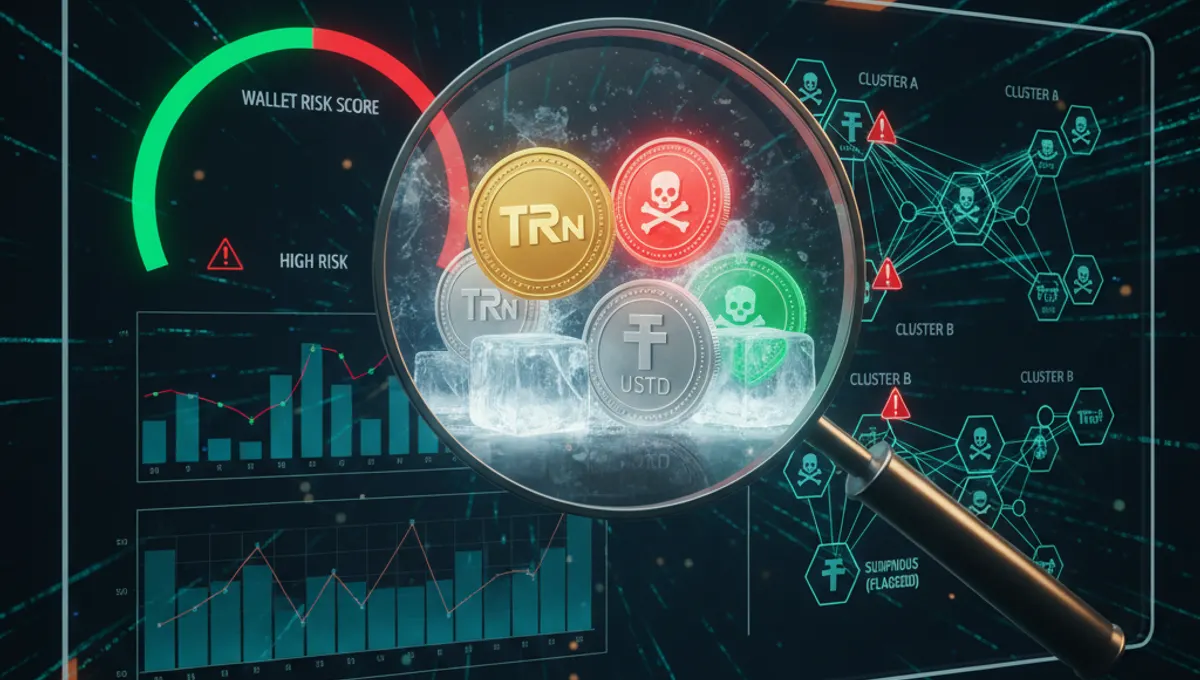
Crypto wallet screening examines the on-chain history of a blockchain address to flag potential compliance issues. Every transaction on public blockchains like Bitcoin, Ethereum, and Tron is permanently recorded, allowing analysts to trace fund movement and identify red flags. Screening matters because receiving tainted cryptocurrency can result in your exchange account being frozen, your funds being seized by law enforcement, or your coins becoming unspendable. Financial institutions and exchanges use wallet screening to comply with anti-money laundering (AML) regulations and know-your-customer (KYC) requirements. For individual users, screening protects against unknowingly receiving stolen funds, ransomware proceeds, or money linked to sanctioned entities. A crypto wallet example might be a Tron address that received USDT from a mixer service; screening would flag this as higher risk due to the mixing activity obscuring the original source.
How Does AML Risk Scoring Work for Crypto Wallets?
An AML risk score is a numerical rating assigned to a wallet based on multiple factors. Screening tools analyze transaction patterns, counterparty risk, and historical associations to generate this score. Risk factors include: direct or indirect connections to known darknet markets, ransomware wallets, or theft proceeds; use of mixing or tumbling services that obscure transaction trails; transactions with sanctioned entities or high-risk jurisdictions; and clustering with wallets flagged by law enforcement. Most screening services use a scale from 0 (very low risk) to 100 (very high risk), though some use color coding (green, yellow, red) or categorical ratings (low, medium, high, critical). A wallet with a score below 20 is typically considered acceptable for most transactions. Scores between 20 and 50 warrant investigation into the specific risk factors. Scores above 50 indicate significant compliance concerns and should be avoided unless you have verified the source independently.
Step-by-Step: How to Screen a Crypto Wallet Before Receiving Funds
Follow these steps to screen a wallet address before accepting cryptocurrency:
1. Obtain the full wallet address from the sender (e.g., a Tron TRC20 address starting with T, a Bitcoin address, or an Ethereum address).
2. Visit a reputable crypto wallet screening service listed on verified AML services directories.
3. Paste the address into the screening tool's search field.
4. Review the generated risk score and detailed report, which typically includes transaction history, connected entities, and flagged risk categories.
5. Check for specific red flags: mixer usage, darknet market connections, stolen fund reports, or sanctions list matches.
6. If the risk score is low (under 20), the wallet is generally safe to receive from.
7. If the score is medium (20–50), investigate the specific risk factors before deciding.
8. If the score is high (above 50), decline the transaction or request funds from an alternative address.
9. Document the screening result for compliance records, especially for business transactions.
10. Repeat screening for any new addresses before accepting large transfers.
Understanding Crypto Wallet Fees and Screening Costs
Crypto wallet fees refer to transaction costs charged by blockchain networks and exchanges, but screening fees are separate charges imposed by AML analysis services. Many screening tools offer a free tier with basic risk scoring for a single address, though results may be limited or delayed. Paid screening services typically charge per address checked, ranging from a few dollars to higher rates for enterprise-level monitoring. Some services offer subscription models for ongoing wallet monitoring, which is useful if you receive frequent cryptocurrency transfers. When evaluating screening services, compare not just the crypto wallet fees for checking, but also the depth of reporting, speed of results, and whether they cover the specific blockchain you need (Tron TRC20, Bitcoin, Ethereum, etc.). Free screening tools are adequate for occasional checks, but businesses handling regular crypto transactions should invest in paid services for comprehensive reporting and compliance documentation. Check the curated list of verified AML services on this site to find options that match your budget and compliance needs.
What Risk Categories Does Wallet Screening Detect?
Crypto wallet screening identifies several specific risk categories that indicate potential compliance issues:
- Mixer and tumbler usage: Funds routed through services designed to obscure transaction trails.
- Darknet market connections: Direct or indirect links to known illegal marketplaces.
- Stolen funds and theft proceeds: Coins traced to reported hacks or theft incidents.
- Ransomware wallets: Addresses known to receive ransom payments.
- Sanctions exposure: Wallets connected to individuals or entities on government sanctions lists (OFAC, EU, UN).
- Gambling and high-risk services: Transactions with unregulated gambling platforms.
- Scam and fraud proceeds: Funds linked to Ponzi schemes, rug pulls, or investment fraud.
- Frozen USDT and exchange bans: Coins previously flagged by major exchanges, making them difficult or impossible to sell.
Screening reports typically break down which categories apply to a given address, allowing you to make an informed decision about whether to accept the transfer.
Crypto Wallet Ranking and Comparing Screening Services
When choosing a crypto wallet screening service, evaluate providers based on several criteria. Coverage matters: does the service support the blockchains you use (Tron, Bitcoin, Ethereum, etc.). Accuracy is critical; services that update their threat databases frequently and integrate with multiple blockchain analytics sources provide more reliable results. Speed of reporting varies; some tools return results instantly, while others may take hours for detailed analysis. Transparency in methodology helps you understand why a wallet received a particular risk score. User interface and reporting quality affect how easily you can interpret results and document them for compliance. Pricing structure should match your volume; occasional users benefit from free or pay-per-check models, while high-volume users need subscriptions. Regulatory alignment is important; services that comply with AML/KYC standards and maintain audit trails are preferable for business use. Rather than relying on informal rankings, consult the verified AML services directory on this site, which curates screened providers and their specific strengths.
What to Do If Your Wallet Is Flagged as High Risk
If a wallet you own or control receives a high AML risk score, take these steps:
1. Review the detailed report to understand which specific risk factors triggered the flag. Is it mixer usage, a sanctioned entity connection, or something else?
2. Trace the source of the flagged transaction. If you received funds from a legitimate business, contact them to verify the transfer and ask if they can send from an alternative address.
3. If the high risk is due to historical activity before you owned the wallet, document your acquisition date and source. This helps if an exchange questions the funds later.
4. Avoid depositing flagged coins to major exchanges immediately; they may reject or freeze the deposit. Instead, contact the exchange's compliance team beforehand to explain the situation.
5. Consider using a lower-risk address for future transactions. Generate a new wallet and request future transfers to that address instead.
6. For business purposes, maintain detailed records of all screening results and remediation steps taken.
7. If the risk is due to a mistake or false positive, some screening services allow you to dispute the result; contact their support team.
In some cases, coins flagged as tainted may become unspendable on regulated exchanges, so proactive screening before receiving funds is always preferable to remediation after.
Frequently asked questions
What is a crypto wallet number and how does it relate to screening?
A crypto wallet number is the unique alphanumeric address that identifies a wallet on a blockchain (e.g., a 34-character Bitcoin address or a Tron address starting with T). Screening tools use this address to analyze transaction history and assign a risk score. The address itself is public and visible on the blockchain, but screening reveals the hidden risk factors associated with it.
Can I screen a wallet for free, or do I need to pay?
Many screening services offer free basic checks for a single address, providing a risk score and summary report. Paid services typically offer more detailed analysis, faster results, and ongoing monitoring. For occasional personal use, free screening is usually sufficient. Businesses handling regular transactions should invest in paid services for comprehensive compliance documentation.
How is a crypto wallet explained in simple terms?
A crypto wallet is a digital account that holds cryptocurrency and is identified by a unique address on a blockchain. Think of it like a bank account number; the address is public and can be shared to receive funds, but only the private key holder can spend the coins. Screening a wallet means checking its transaction history for compliance risks.
What crypto wallet fees should I expect when screening addresses?
Screening fees are separate from blockchain transaction fees. Free screening tools check one address at no cost but may have limited reporting. Paid services typically charge per address (a few dollars) or offer monthly subscriptions for unlimited checks. Enterprise services may charge higher rates for custom reporting and integration.
How do I know if a wallet has received frozen USDT or tainted coins?
Screening reports flag coins linked to known theft, ransomware, or sanctions exposure. If a wallet has received frozen USDT (previously flagged by exchanges), the screening tool will note this in the risk factors. Exchanges may reject or seize such coins, so screening before accepting transfers is critical to avoid receiving unspendable funds.