What Does a Crypto Wallet Near Me Mean?
A crypto wallet near you refers to a local or accessible service where you can hold and manage cryptocurrency while benefiting from AML compliance features. This could be a physical exchange location, a licensed custody provider, or a digital wallet with integrated screening tools. The proximity aspect matters for users who prefer in-person support, local regulatory oversight, or faster customer service. Most modern wallets—whether centralized exchanges or self-custody platforms—now include some form of address screening to flag high-risk transactions. The best wallets for your location combine ease of use with transparent risk scoring and the ability to check incoming addresses before you accept funds.
How Crypto Wallet Fees and Risk Scoring Work Together
Crypto wallet fees vary widely depending on the service type and the level of AML screening included. Centralized exchanges typically charge trading fees (0.1% to 0.5%), withdrawal fees, and sometimes deposit fees. Self-custody wallets may charge network fees only, but offer no built-in screening. Premium AML-integrated wallets charge subscription fees or per-check fees for address screening. Risk scoring is a numerical rating (usually 0–100 or low/medium/high) assigned to a wallet address based on transaction history, association with known darknet markets, mixers, scams, or sanctioned entities. Higher fees often correlate with more robust screening: services that perform deeper blockchain analysis and sanctions list cross-referencing typically cost more. Understanding this trade-off helps you choose a wallet that fits your compliance needs and budget.
Crypto Wallet Example: What a Risk Score Tells You
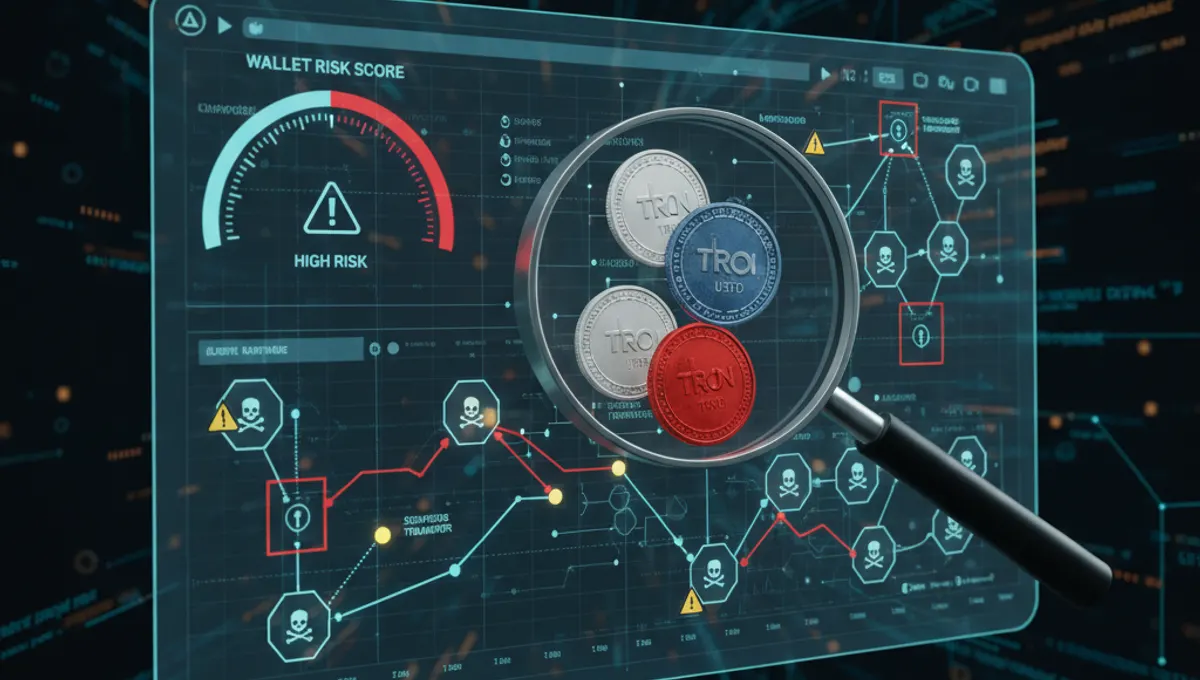
A crypto wallet example with a low risk score (0–20) typically has a clean transaction history with no links to mixers, darknet markets, or stolen funds. A medium-risk score (21–60) may indicate some exposure to high-risk services or unverified sources, but not necessarily illegal activity. A high-risk score (61–100) suggests strong indicators of tainted coins, sanctions exposure, or darknet involvement. For instance, if you receive USDT on Tron (TRC20) from an address flagged with a score of 85, that wallet likely has connections to known scams, stolen funds, or sanctioned entities. Before accepting such a transfer, you should investigate further or reject it entirely, as holding tainted coins can lead to exchange account freezes or regulatory scrutiny. Most compliant wallet services provide a risk score explanation showing which factors drove the rating.
How to Check a Crypto Wallet Address Before Receiving Funds
Step-by-step process to screen an address:
1. Obtain the sender's wallet address (Bitcoin, Ethereum, Tron, or other blockchain).
2. Visit a trusted AML screening service—check the curated list of verified AML services on this site for options that match your blockchain and risk tolerance.
3. Enter the address and select the blockchain (BTC, ETH, TRX, etc.).
4. Review the risk score and detailed report, which typically shows transaction history, entity associations, and any sanctions or darknet flags.
5. Decide whether to accept the transfer based on the risk level and your compliance policy.
6. If the score is high, request clarification from the sender or decline the transaction.
For USDT on Tron (TRC20), this process is especially important because TRC20 tokens are frequently used in cross-border transfers and scams. Always screen before accepting large amounts.
Crypto Wallet Ranking: What Makes a Service Trustworthy?
A reliable crypto wallet service should rank high on transparency, regulatory compliance, and screening depth. Key criteria include:
- Regulatory licensing (e.g., money transmitter license in your jurisdiction).
- Published AML/KYC policies and sanctions list integration.
- Real-time address screening with clear risk score methodology.
- Support for multiple blockchains (Bitcoin, Ethereum, Tron, Solana, etc.).
- Responsive customer support and dispute resolution.
- No history of frozen accounts without explanation.
Services that rank well typically offer both self-custody and custodial options, transparent fee structures, and detailed transaction reports. The best wallets for your location will be those licensed in your country or region, with clear compliance documentation. Our site maintains a curated list of verified AML services that meet these standards—starting there is the safest way to find a wallet near you that won't compromise your compliance or freeze your funds unexpectedly.
What Happens When a Wallet Is Flagged as Tainted or Stolen?
When a wallet receives funds flagged as tainted or stolen, several outcomes are possible. If you hold the coins on a centralized exchange, the exchange may freeze your account pending investigation. If you hold them in self-custody, the coins remain in your wallet but may become difficult to sell or transfer without triggering compliance alerts at other exchanges. Tainted coins typically originate from mixers (services that obscure transaction trails), darknet markets, ransomware payments, or theft. Holding them knowingly can expose you to legal liability in some jurisdictions. The safest approach is to screen all incoming addresses before accepting funds and to reject transfers from high-risk sources. If you accidentally receive tainted coins, document the transaction, report it to the sending party, and consult a compliance professional before attempting to move or sell the funds.
Acceptable Risk Score Thresholds and Compliance Best Practices
Most institutional and regulated wallet services set a risk score threshold of 50 or lower for acceptance. Scores above 50 typically require manual review or rejection. For retail users, a conservative threshold is 30 or lower—anything above that warrants investigation. Compliance best practices include:
- Always screen incoming addresses, especially for amounts over a certain threshold (e.g., $1,000).
- Maintain records of all screening reports for audit purposes.
- Use services that integrate with major sanctions lists (OFAC, EU, UN, etc.).
- Avoid wallets or exchanges that do not provide transparent risk scoring.
- If you operate a business, implement a written AML policy that defines your acceptable risk levels.
- Review your wallet's transaction history regularly for unexpected high-risk activity.
By following these practices, you reduce the likelihood of receiving frozen funds or facing regulatory action.
Frequently asked questions
What is a crypto wallet number and how does it relate to AML screening?
A crypto wallet number is the unique alphanumeric address assigned to your wallet on a blockchain (e.g., a Bitcoin address or Tron address). AML screening uses this number to look up the address's transaction history and risk profile. Each address is scored independently, so the same person may have multiple wallet numbers with different risk ratings. Always verify the correct wallet number before sending or receiving funds.
Can I find a crypto wallet near me with zero fees?
Most self-custody wallets (like hardware wallets or open-source software) have zero service fees, but you'll pay blockchain network fees for transactions. Centralized exchanges near you typically charge trading and withdrawal fees. Free AML screening is rare; most services charge per-check or subscription fees for address screening. The trade-off is between convenience and cost—free wallets offer less support and no built-in screening.
How do I know if my crypto wallet is compliant with local regulations?
Check whether the service holds a money transmitter license or equivalent in your jurisdiction. Visit your local financial regulator's website and search for the wallet provider's name. Compliant services publish their AML/KYC policies and sanctions list integrations. If a wallet doesn't disclose its regulatory status or compliance procedures, it's a red flag. Always verify before depositing significant funds.
What should I do if I receive USDT on Tron with a high-risk score?
Do not move or sell the USDT immediately. First, document the transaction and the risk report. Contact the sender to understand the source of the funds. If the score is above 70, consider rejecting the transfer or requesting a refund. If you've already received it, consult a compliance professional before attempting to transfer or exchange it, as doing so may trigger account freezes or regulatory scrutiny.
How often should I screen my wallet address for risk?
Screen incoming addresses before every transaction, especially for large amounts. If you operate a business or hold significant cryptocurrency, review your wallet's overall risk profile monthly. Use services from the verified AML providers list on this site for consistent, reliable screening. Regular monitoring helps you catch suspicious activity early and maintain compliance.